
Mindfulness in leadership is emerging as one of the greatest challenges of our time. Translating meditative insights and inner silence into the language of KPIs, strategic or tactical SMART goals, or aligning them with ROI is not just a trend—it’s a master-level task. For top executives and business owners, it’s about more than just experimenting with mindfulness practices—it’s about consciously embracing and integrating them as a system for managing energy, attention, and meaning in the context of real business challenges.
Mind Fu
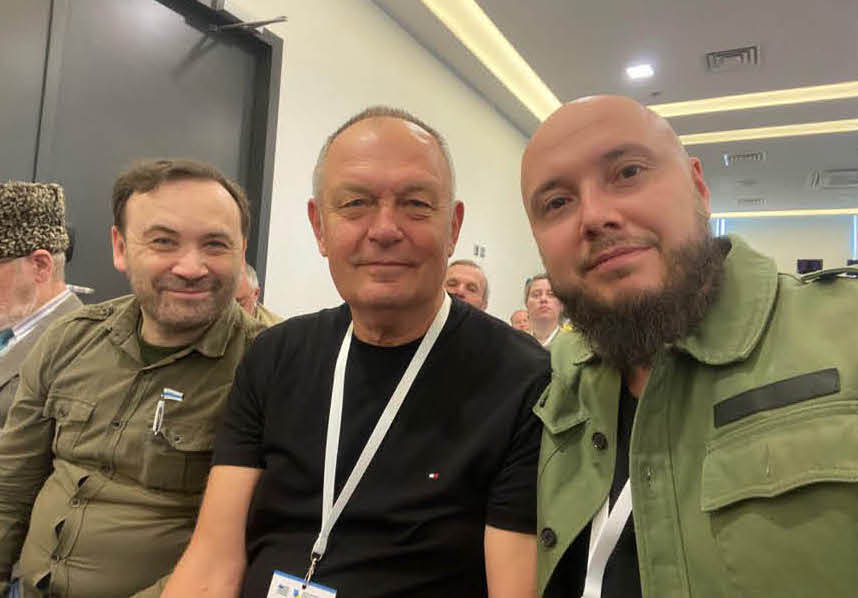
This challenge was accepted by Sergiy Venger, a former top executive of leading Ukrainian and international companies, and now a U.S.- based business advisor and mentor. He is the founder of Mind Fu—an approach to Mindful Management—which is based on understanding outcomes through the lens of cause-and-effect relationships of actions and inactions.
Mindful management is about non-judgmental acceptance of results, coupled with clear recognition of the specific actions (or inactions) of individuals that led to those outcomes. It’s the transformation of awareness into systemic decision-making.
According to Venger, every result has a name. Accepting that your outcomes depend only on you—and not on external circumstances—is a deep challenge to a manager’s ego and sense of control. The Mind Fu philosophy insists that every employee has an undeniable impact on results. Circumstances cannot be used as excuses. When mindful management is truly applied, organizations stop repeating actions that haven’t worked before and begin transforming them into effective strategies that align with real goals.
Adopting this mindset requires redefining what mindfulness means in business. It’s not about meditation—it’s about strategic presence. For leaders, mindfulness is not about sitting in lotus pose.
It’s about mastering three core skills:
- Maintaining focus in chaos or crisis;
- Hearing the signal through the noise;
- Making decisions not from reaction—but from clarity.
- It’s a shift from “controlling” to “feeling the direction.” Not just operating the system—but tuning it. And that tuning requires inner stillness.
Traditional leaders persuade. The leader of the new era radiates clarity. And people follow that clarity. This level of leadership is impossible without attention training, intuitive awareness, and somatic intelligence.
Mindfulness is not esotericism—it’s the B2B-infrastructure of the brain for attention management, depth, and team synchronization. In the cognitive economy, attention is the main resource. In the cognitive due diligence of the 2030s, teams will be evaluated based on neuroresilience and mental clarity.
Mindfulness as a Competitive Advantage A mindful leader detects weak market signals sooner and acts from strategic clarity, not noise. The first step on this path: learning to pause and dive into silence.
Noise and Pause: Cognitive Silence as Business Value
Why is an internal pause not a weakness—but a new type of asset? Because everything starts with noise. Not with ideas. Not with action. With noise. In the head, in chats, in offices. Between calls. Between deadlines. In an age of hypercommunication, even silence looks like a glitch.
But real decisions don’t come from noise. They come from silence.
Silence is not the absence of sound—it’s the absence of internal storm. It’s a cognitive pause where you don’t react—you start to see. This is where our conversation about a new business asset begins: cognitive silence.
It isn’t tracked in your financials—but it makes money. It’s not in your KPIs—but it determines if your brain is a strategist—or just reacting. It’s not about rest. It’s about depth.
What is cognitive silence and why do you need it to truly think—not just simulate thought? It’s a state where mental activity doesn’t stop, but changes form—like water turning into steam.
In this state:
- Inner dialogue slows down;
- You stop clinging to thoughts—and they stop clinging to you;
- Your attention crystallizes instead of dissolving.
This isn’t meditation in the traditional sense. It’s cognitive hygiene. We’ve learned to brush our teeth. But not to clean our minds. Cognitive silence is how you switch off the autopilot. And while it’s on—you’re not leading. You’re reacting. Trapped in patterns. Operating a “grow-up-and-manage” script.
Why does noise ruin decisionmaking?
Because noise is:
- Endless unstructured inner talk;
- Reflection with no anchor;
- Fear of missing out—disguised as “analysis.”
Thought isn’t always a sign of thinking. Sometimes it’s anxiety in PowerPoint format. An idea that hasn’t passed through silence is like a seed tossed on barren soil. You’re planting—but don’t know what will grow. Because you don’t have clarity. You don’t have the field.
Then decisions are born from chaos:
- “Let’s do what worked yesterday.”
- “That’s what competitors do.”
- “We need a strategy update.”
That’s not strategy. That’s noise—in Excel, Word, and PowerPoint. Silence as Added Value: What Does It Add? Let’s say you’re running a startup. Or a team. Or a business. You work 60–70 hours a week. You’re doing everything right—but something’s missing. You’re moving—but not sure where. You probably lack cognitive silence. Neither your team nor your communication has it.
That means:
- Attention is unfocused
- Decisions are vague.
- Stress is high
- Reactivity grows.
- Meaning is lost
- You act, but don’t know why.
- Cognitive silence gives you:
- Better decisions;
- Deeper perception;
- Efficiency amid uncertainty;
- Presence in dialogue;
- Humanity in leadership.
The Biology of Silence: Brain in Meta-Observation Mode
Neuroscientists call it the default mode network (DMN). When you’re in silence, the parts of the brain responsible for:
- integrating information,
- understanding self in time,
- and feeling an inner self activate.
Instead of reacting—you get panoramic vision. Instead of impulse—you feel rhythm. You begin to distinguish between noise, signal—and meaning.
The hardest thing isn’t staying silent when there’s nothing to say. It’s not reacting when everything demands a reaction.
Technique: Real-Time Cognitive Pause
A simple protocol for business: 1.2.3.4.5. Stop. Catch the moment you want to react. Close your eyes. Deep inhale and exhale. Do nothing. Just observe your breath. Feel the air entering and leaving your nostrils. Notice the temperature, the rhythm, the path. Continue until you feel calm and centered—until you notice which nostril you’re breathing through.
- Now: Look inward.
- Name it: What do you really want to do?
- Hear it: What’s going on inside, without words?
- Decide: Act—or don’t—but do it mindfully.
It’s just 5 to 30 seconds. But they might be worth a year’s budget—or transform your life.
Chicago, Illinois