Eighty-four-year-old Eugenia arrived in Sweden during the third year of a war that reshaped her world. The Russian invasion of Ukraine in 2022 had driven millions from their homes, but for Eugenia, the journey carried even deeper heartbreak. She came to join her daughter and grandson after laying her husband to rest — stepping into a new life, yet carrying the weight of the old one with her.
 She brought few possessions. Among them, quietly nestled, was her husband’s tie. For Eugenia — like countless other women — this simple accessory was never about fashion, formality, or history. It was about love. The tie was part of a life built together over decades. It held memories of shared mornings and quiet evenings, milestones celebrated and hardships endured. In the uncertainty of exile, it became her silent anchor — a reminder of connection, resilience, and the comfort of what once was.
Ties have long been symbols of strength, dignity, and tradition. Their history reaches back to the 17th century, when Croatian soldiers, celebrated for their valor during the Thirty Years’ War, arrived at the French royal court wearing bright silk neckerchiefs. Their distinctive look caught the attention of Louis XIV, who soon embraced the style himself, turning it into a continental trend. The French word cravate, derived from Croate (Croat), was born — and with it, the tie’s enduring place in European culture.
Today, in Eugenia’s hands, the tie became something more. Not just a relic of her husband’s wardrobe, but a symbol of love that defies war, distance, and loss. It is a thread that binds the past to the present — and a quiet testament to the enduring power of memory.
For centuries, ties have spoken a language all their own — subtle, yet powerful. During the French Revolu- tion, they became more than mere adornment; the French used tie colors to signal their political beliefs. In England, the tie evolved into a mandatory emblem of gentlemanly decorum. Across the Atlantic, American innovator Jesse Langsdorf revolutionized menswear in 1924, patenting the modern «ideal tie,» crafted in three bias-cut pieces — the design still recognized today as classic.
For generations, ties reigned as one of the few socially accepted accessories for men. They represented pride, status, and personal style. Men curated collections, amassing drawers and wardrobes filled with silken treasures — hundreds of millions sewn and worn over the decades. Although the world has moved on and demand has faded, ties remain quietly tucked away in many homes. They sit like relics, cherished as tokens of another era.
But the tie Eugenia brought to Sweden became something else entirely. No longer destined to rest in a drawer, this particular tie was transformed. Guided by love and memory, Eugenia’s hands shaped it into a delicate rose brooch — a keepsake to wear close to her heart, infused with her story and spirit.
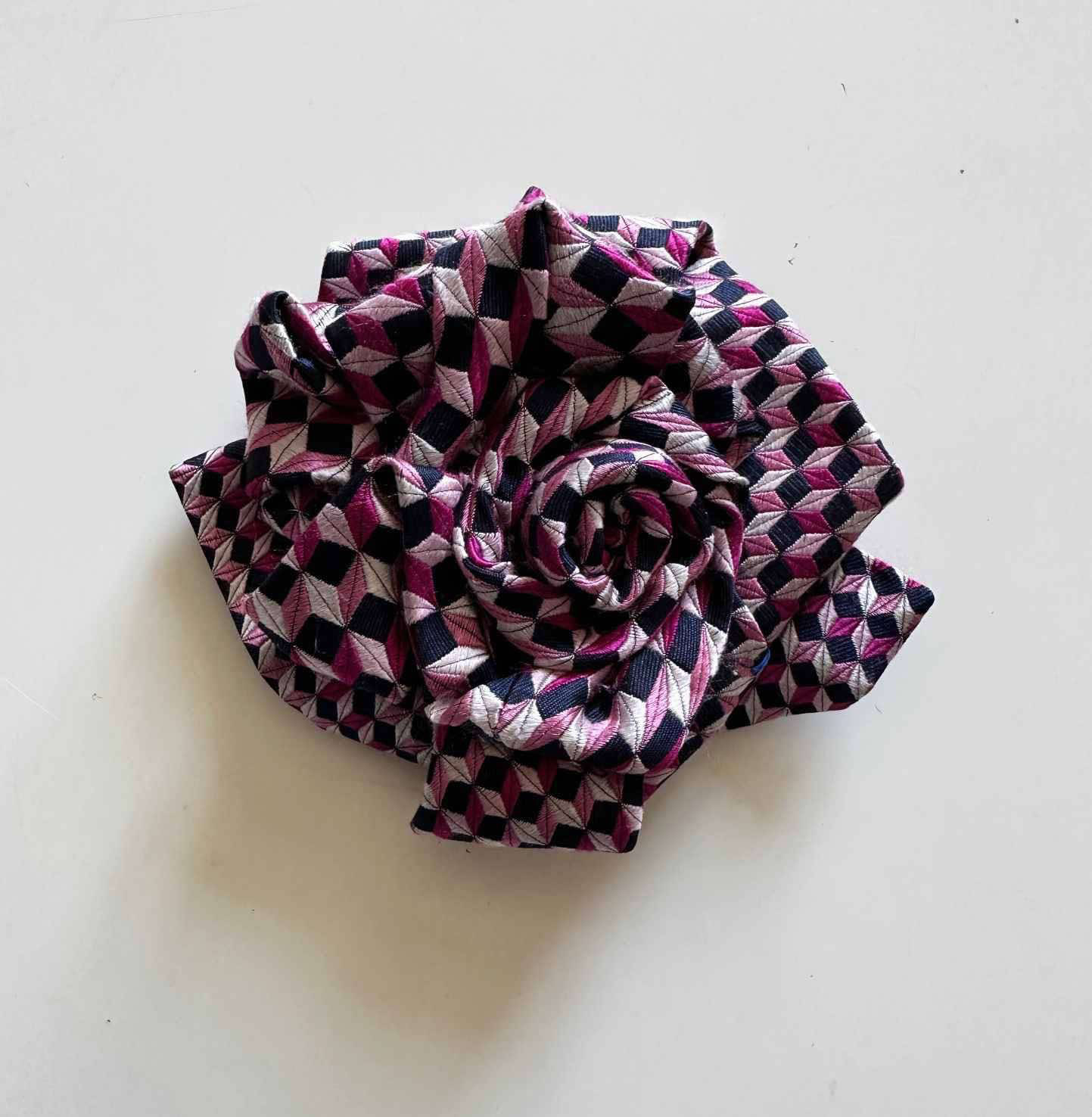
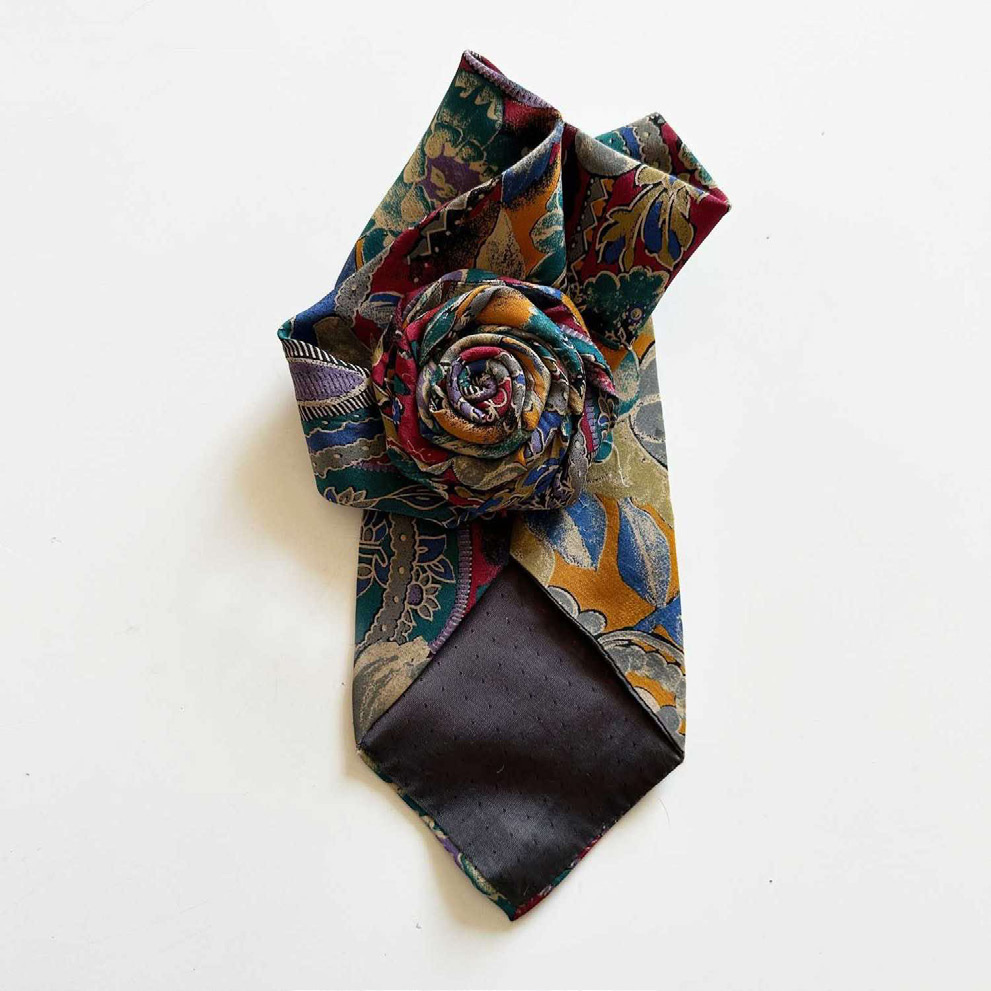
Eugenia’s daughter later took her to a gathering of Ukrainian refugees in Sweden — a space of solace and creativity organized by artist Lyudmila Khristeseva. It was there that the rose caught the artist’s eye and stirred something deep within her.
«I saw more than a simple flower,» Khristeseva reflects. «This rose carried roots far beyond one woman’s grief. I wanted one for myself — as a way to honor the grandfather I never knew and to stand with my mother, who grew up fatherless. And now, in this new war, how many more children will face the same? How many roses will bloom from sorrow? A million? A billion?»
Moved by Eugenia’s quiet act of transformation, Lyudmila Khristeseva saw an opportunity — not only to preserve memories, but to give women a voice through craft. Handicraft, long considered part of the female domain, became a form of healing and empowerment. Determined to nurture this outlet, the artist created welcoming spaces for Ukrainian women across Sweden to gather, create, and share.
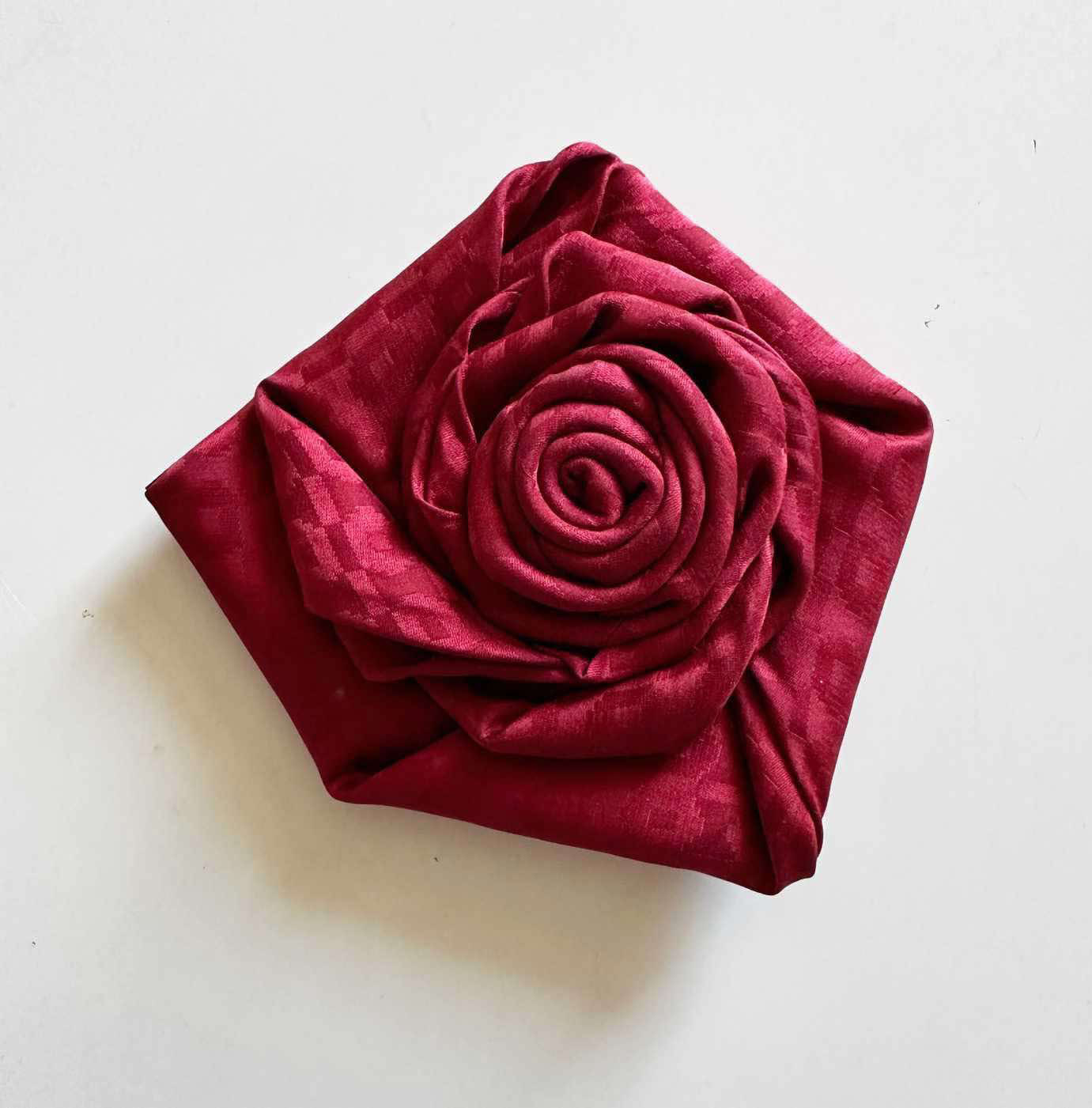

Over the past three years, as war raged on, these workshops grew — hosted in cities and museums across Sweden, each filled with stories as unique as the roses they inspired. Together, they form a tapestry of resilience, where ties once tied around collars now bloom proudly, pressed close to hearts.
Across centuries and cultures, women have turned to their hands in times of turmoil. Ukrainian women are no exception. Through embroidery, sewing, knitting, baking, and weaving camouflage nets, they channeled their collective grief and fragile hopes into acts of creation — each stitch and gesture becoming a quiet defiance against despair.
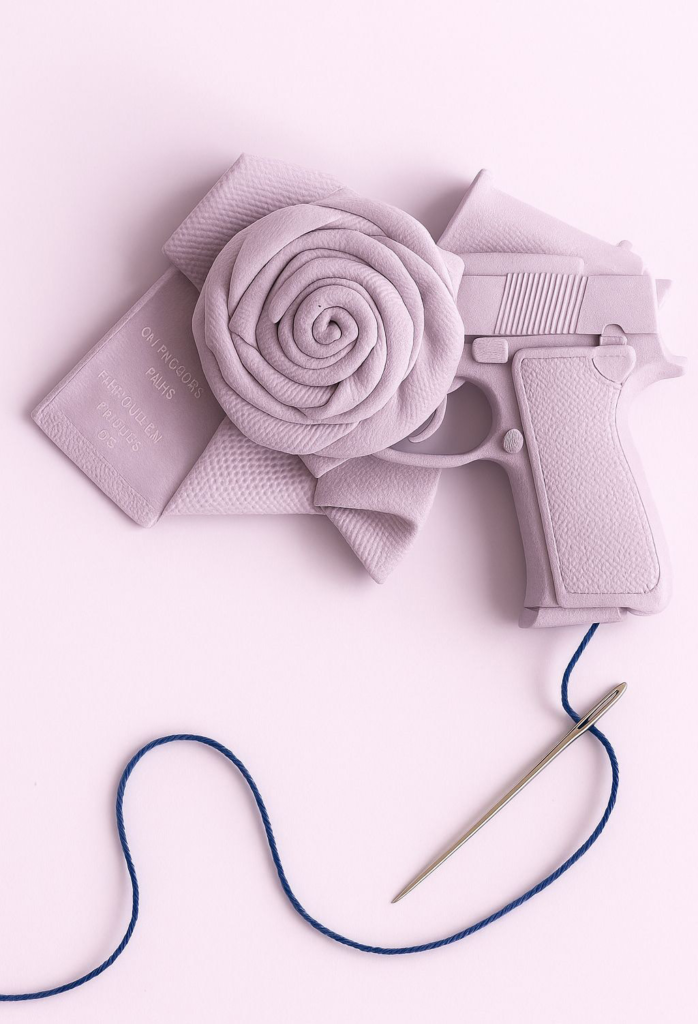
Amid this tapestry of survival, artist Lyudmila Khristeseva — already acclaimed for her conceptual art projects — saw the potential to weave something even more profound. Inspired by Eugenia’s rose-shaped brooch, she proposed scaling up the idea, giving it both a name and a new life: Roses of Ties.
 With a simple invitation posted on social media, Lyudmila Khristeseva called on others to join the movement. She asked people to bring ties — forgotten treasures tucked away in drawers and closets — to transform them into brooches. The response was immediate and heartfelt. Swedes brought vintage silk ties, some bearing the labels of legendary fashion houses. These elegant relics, once symbols of masculine formality, were offered up to become part of something far more intimate and inclusive.
Participants had options: they could craft their own brooches in guided workshops or donate their ties to a growing community of Ukrainian women artisans. Even 84-year-old Eugenia, despite limited dexterity, found meaningful ways to contribute — proof that artistry knows no age or limitation.
But Roses of Ties is more than an artistic endeavor. It is, at its core, about healing. For many, the act of creating became a form of therapy. Every cut, fold, and stitch offered a way to process loss, reclaim dignity, and reconnect with a past that war had violently fractured. These brooches are not just beautiful — they are deeply symbolic. Each rose whispers stories of women who lost homes, loved ones, and certainty, yet still chose life and creativity over sorrow.
In a world obsessed with fast fashion and fleeting trends, these handcrafted brooches offer something radical: permanence. They are not just decorative. They are meaningful. Through them, Roses of Ties transcends craft and becomes a cultural phenomenon — seamlessly blending fashion, art, therapy, and the enduring power of the feminine spirit.
This is slow fashion with soul. This is sustainable design born of necessity and love. And this is circular economy at its most poetic — ties once destined for oblivion now reborn as cherished symbols of resilience.
Eugenia’s story brings this full circle. She never knew her father, who died in World War II. Her earliest memories are of hiding in a basement with her mother as bombs fell. Eight decades later, war found her again, forcing her to flee Ukraine for a foreign land. Her daughter, too, will now live with absence — she will never see her father again. But she will wear his tie transformed, lovingly reshaped into a rose that rests near her heart.
Through Roses of Ties, countless women — regardless of background or nationality — find solidarity in that gesture. They understand. They relate. They support.
Because this project is more than a story about refugees or handicrafts. It is about memory that refuses to gather dust. It is about a flower pinned to a lapel, speaking softly of love, loss, and courage. It is about women’s hands — steady and tender — turning fragments of the past into objects of grace and meaning.
In every brooch, there blooms not just a rose, but a testament: beauty can rise from the rubble, and hope can take root even in exile.
Los Angeles, California