
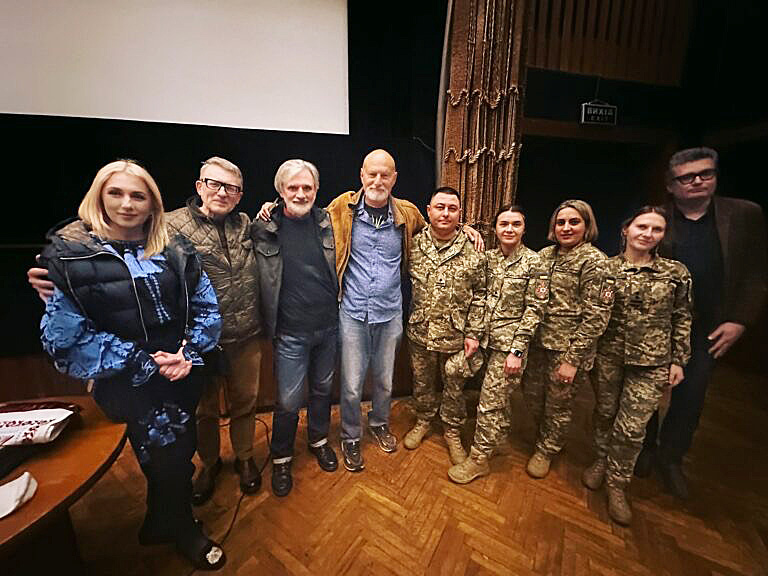
Oscar- and Emmy-nominated filmmaker Frederick Marx reflects on leadership, resilience, and the evolving meaning of the “warrior” in a world under pressure.
Speaking from Ukraine during a Zoom interview with Vladimir Koshevoy and Olena Yaremchuk, Frederick Marx—an Oscar- and Emmy-nominated filmmaker—offers a perspective shaped by decades of work at the intersection of storytelling, psychology, and human development. Known for his role in the landmark documentary Hoop Dreams and for his later work with veterans through the series Veterans Journey Home, Marx has long explored the complexities of identity, transformation, and human resilience. His reflections, however, extend beyond filmmaking. They address a deeper and increasingly urgent question: what it means to live with clarity and purpose in a time of global instability.
 At a moment when political, environmental, and social systems appear to be under mounting strain, Marx is less interested in forecasting outcomes than in examining human response. He frames the present not simply as a crisis, but as a convergence of forces that challenge longstanding assumptions about stability and progress. In his words, the current period signals “the end of modern industrial civilization as we know it,” not necessarily as a collapse, but as a profound transformation in how societies function and how individuals situate themselves within them.
Yet for Marx, the more pressing issue lies not in the external conditions themselves, but in the internal capacity to navigate them. In a world increasingly defined by uncertainty, distraction, and emotional volatility, the question becomes not how to control events, but how to respond to them with discipline and awareness. It is within this context that Marx reintroduces the concept of the “warrior”—not as a figure of violence, but as a model of psychological and ethical readiness.
Marx’s interpretation of the warrior is informed by Jungian archetypal theory and by his own decades-long engagement with the Mankind Project, an organization focused on personal development and what it terms “mature masculinity.” Within this framework, human development is understood as a balance among four primary archetypes: the warrior, the sovereign, the magician, and the lover. These categories, Marx emphasizes, are not gender-exclusive but represent universal aspects of human experience. The warrior, in this schema, is frequent- ly misunderstood. It is not a symbol of domination, but of discipline—the capacity to act with clarity, restraint, and purpose when circumstances demand it.
This distinction becomes particularly significant when considered in the context of Ukraine, where questions of defense, resilience, and survival are not abstract but immediate. For Marx, being physically present in such an environment underscores the practical implications of his ideas. The concept of preparedness is no longer theoretical; it is embedded in daily reality. Yet even here, he resists simplistic interpretations. The warrior, as he defines it, is not driven by aggression, but by responsibility—the responsibility to protect, to endure, and to act when necessary.
Central to Marx’s thinking is a tension that might at first appear contradictory. He identifies as both a pacifist and a practicing Buddhist, traditions that place a strong emphasis on nonviolence and the sanctity of life. For Marx, this is not a paradox to be resolved, but a reality to be held. Human life, he insists, is inherently sacred. At the same time, the existence of harm and conflict cannot be ignored. The challenge, therefore, is not to choose between peace and preparedness, but to integrate them.
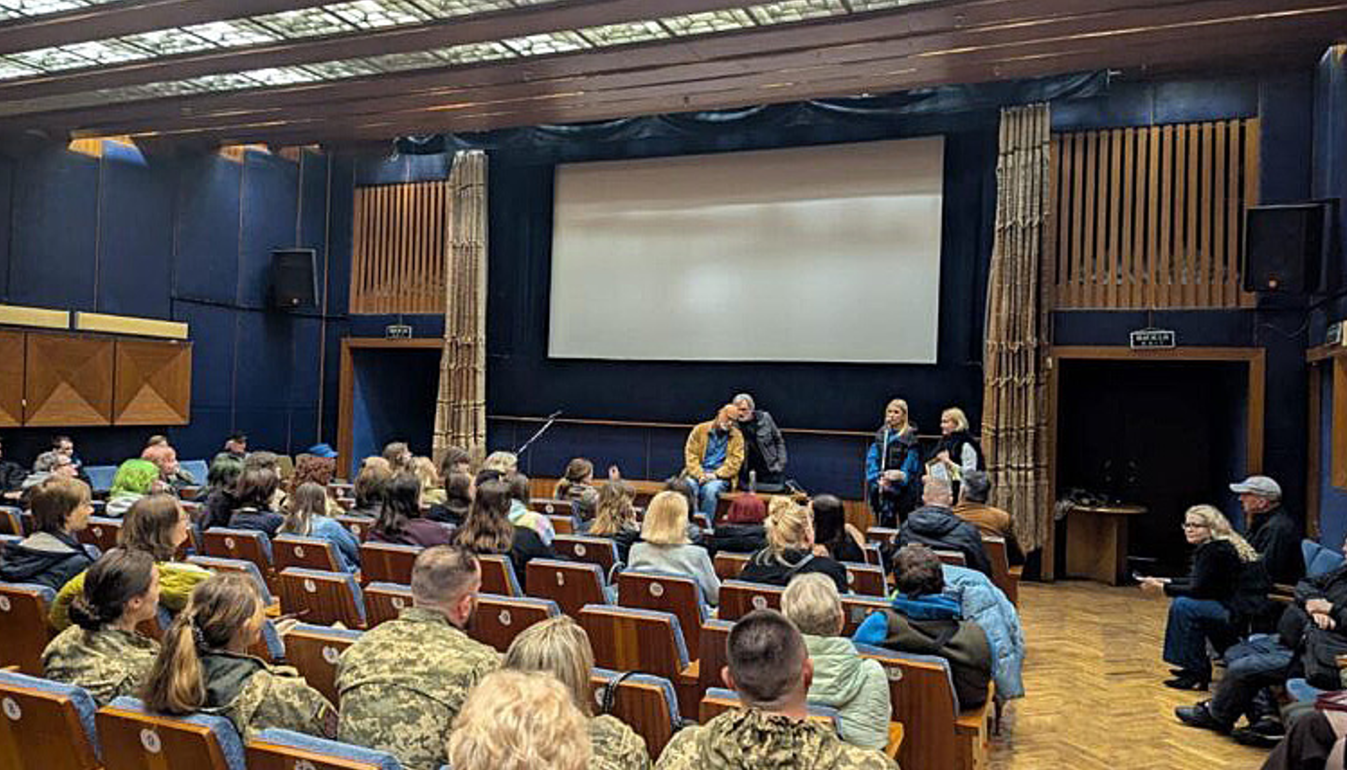
“It’s not about offense,” Marx explains. “It’s about defense.” This distinction is crucial. It shifts the focus away from domination and toward responsibility, away from control and toward readiness. In practical terms, this perspective requires a willingness to confront discomfort, including the possibility of engaging with tools or skills that may initially feel counterintuitive. For Marx, such considerations are not a departure from his values, but an extension of them—a recognition that ethical commitment must coexist with situational awareness.
 Marx’s engagement with these ideas is grounded not only in philosophy, but in lived experience, particularly through his work with veterans. The Veterans Journey Home series examines the transition from military service to civilian life, a process that often reveals the limits of conventional frameworks for understanding identity and purpose. What Marx has observed repeatedly is that the most significant challenges faced by veterans are not solely external. They are internal, involving questions of meaning, belonging, and self-understanding.
This insight, however, is not limited to veterans. Rather, it reflects a broader human condition. In different forms and degrees, individuals across professions and cultures confront similar questions: how to adapt to change, how to reconcile past experiences with present realities, and how to maintain a coherent sense of self in the face of disruption. Marx’s work suggests that the experiences of veterans, while intensified, are not fundamentally different from those of civilians. They serve instead as a lens through which more universal dynamics can be examined.
One of Marx’s most compelling contributions to this discussion is his distinction between a soldier and a warrior. A soldier, he notes, operates within a structured hierarchy, following directives and fulfilling assigned roles. A warrior, by contrast, operates from an internal compass. This does not imply a rejection of structure, but a prioritization of conscience. The warrior, in Marx’s formulation, must be capable of independent thought, guided not solely by external authority, but by an internalized sense of responsibility and ethical clarity.
This distinction has significant implications beyond the military context. In fields ranging from business to governance, individuals are increasingly required to navigate complex and often conflicting demands. The capacity to act with integrity, rather than simply compliance, becomes a defining characteristic of effective leadership. In this sense, the warrior archetype serves not as a literal model, but as a metaphor for a deeper mode of engagement with the world.
Underlying this framework is Marx’s long-standing commitment to Buddhist practice, which he describes as a second pillar of his life alongside his work in human development. Over nearly four decades, he has cultivated an approach to mental discipline that emphasizes awareness, attention, and emotional regulation. For Marx, the mind is both a tool and a potential obstacle. Without conscious engagement, it can become a source of distraction, anxiety, and self-limitation.
 “If we’re not careful,” he observes, “we become slaves to our own minds.” In an era characterized by constant stimulation and information overload, this risk is amplified. The challenge, therefore, is not to eliminate thought or emotion, but to engage with them more skillfully. Marx advocates a practical approach: recognizing unproductive patterns, redirecting attention, and grounding oneself in the present moment. This process does not deny the existence of difficult emotions such as fear, anger, or grief. Instead, it reframes them as potential sources of energy and insight.
Such an approach aligns with a broader understanding of resilience, one that extends beyond endurance to include adaptability and awareness. For Marx, resilience is not merely the ability to withstand pressure, but the capacity to respond to it in a way that preserves clarity and purpose. In this sense, personal development becomes not a luxury, but a necessity—particularly in environments marked by uncertainty and change.
Marx’s reflections ultimately point toward a shift in how strength is understood. In contrast to traditional notions that equate strength with control or dominance, his perspective emphasizes internal coherence. Strength, in this formulation, arises from the integration of discipline, awareness, and empathy. It is less about imposing order on external circumstances and more about maintaining alignment within oneself.
This shift has practical implications. In a world where external conditions are increasingly unpredictable, reli-
ance on stability alone is insufficient. What remains constant is the individual’s capacity to respond—to interpret, to decide, and to act. Developing that capacity requires intentional effort, including the cultivation of habits, practices, and perspectives that support clarity and resilience.
Marx’s conclusion is neither prescriptive nor abstract. It is grounded in a simple, yet demanding proposition: that individuals must prepare themselves, not for a specific outcome, but for the act of navigating uncertainty itself. This preparation is not ideological. It is behavioral, expressed through discipline, awareness, and responsibility.
To be a warrior, in Marx’s sense, is not to seek conflict, but to be ready to meet it—without losing one’s humanity in the process.
In a time defined by complexity and change, this may be the most relevant form of strength.
Volodymyr Koshovyi
Olena Yaremchuk
Ivan Stepurin