
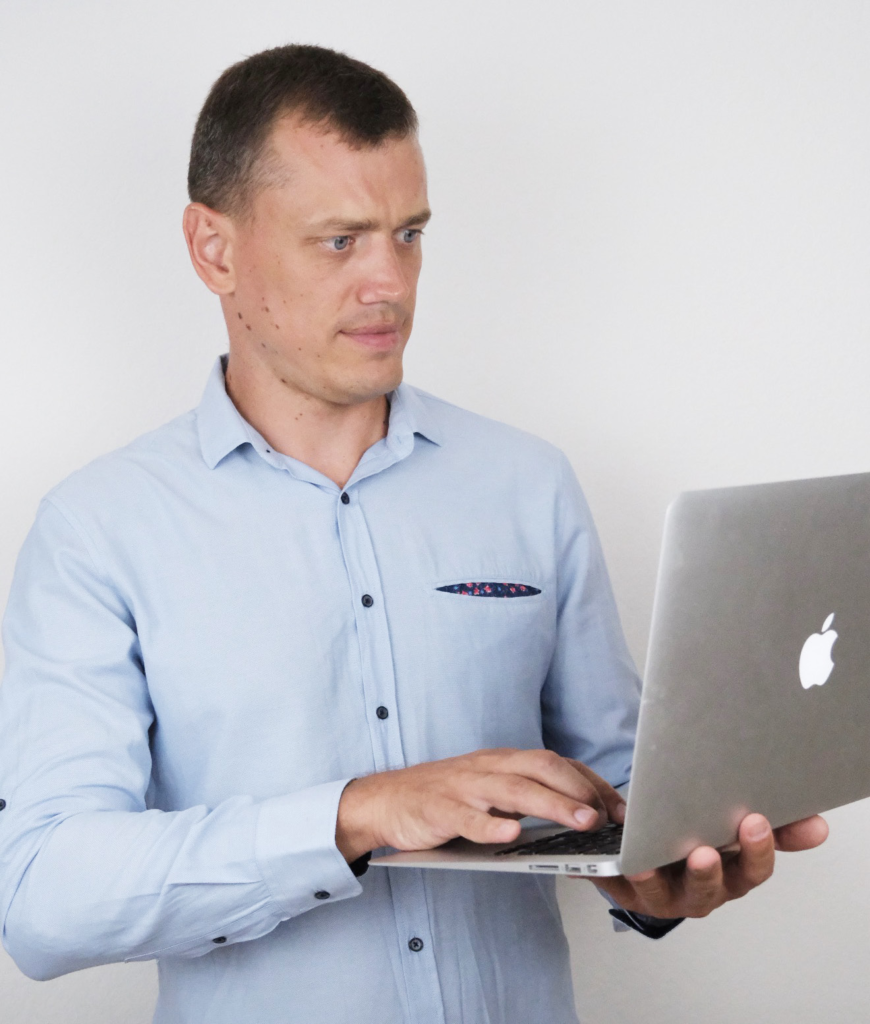
From large-scale business development in Ukraine to technological entrepreneurship in the United States: Ukrainian researcher, inventor, Ph.D. in Finance, and founder of YZ PRO Appliance Repair and YZ PRO Academy, Yevhen Zrazhevets, discusses his professional journey, his innovative method for multiphysics predictive diagnostics of household appliances, the economics of intelligent maintenance, and the potential of his technology to contribute to American technological advancement and economic growth.
The global economy is gradually moving away from reactive maintenance models toward intelligent systems capable of predicting risks, preventing losses, and optimizing the use of resources.
Digitalization, data analytics, advanced algorithms, and automation are transforming not only industrial manufacturing but also traditional service industries.
One entrepreneur working to bring these technologies into practical application is Yevhen Zrazhevets, a Ukrainian business executive with extensive management experience, an academic background in finance, and handson expertise in the American appliance repair industry.
His invention, a method for multiphysics predictive diagnostics of household appliances, introduces a fundamentally different approach to technical maintenance: analyzing the physical condition of equipment, creating an individualized digital model, and identifying potential failures before they result in complete equipment breakdown.
In this exclusive interview with the international magazine Ukrainians and the World, Zrazhevets discusses the relationship between science and entrepreneurship, the economics of technological innovation, and the strategic opportunities his invention could create for the United States.
 1. Mr. Zrazhevets, you combine scientific research, extensive entrepreneurial experience, and hands-on engineering expertise. You hold a Ph.D. in Finance, have managed major enterprises in Ukraine, and are now developing a technology-driven business in the United States. How did your professional journey evolve, and how did your background in economics, business management, and practical engineering lead you toward innovation and invention?
— I firmly believe that the most valuable technological solutions emerge where scientific thinking meets the real needs of business and society.
My professional journey began in finance and economics. I received my higher education at V. N. Karazin Kharkiv National University, graduating with honors with a master’s degree in Finance. I subsequently pursued doctoral studies in Finance at Chernihiv National University of Technology.
At the same time, I obtained an engineering education in road construction. This combination shaped my approach to solving complex problems: I evaluate technology not only in terms of its functionality, but also through its economic efficiency, scalability, and practical value to the end user.
For many years, I managed businesses in Ukraine, working in construction, real estate development, manufacturing, logistics, and technical asset management. Those experiences taught me to understand the true cost of equipment downtime, the financial risks associated with unexpected repairs, and the importance of effective operational management.
After relocating to the United States in 2022, I began studying the American appliance repair and maintenance market in depth. Working directly with equipment, analyzing recurring technical failures, and communicating with customers gave me an entirely new perspective on the industry.
I identified a fundamental problem: a significant portion of the service industry still operates according to a reactive business model. Equipment fails first, and only then does the process of diagnosis, parts procurement, and repair begin.
From an economic perspective, this approach is not always efficient.
That realization led me to explore an alternative: moving from repairing the consequences of equipment failure to predicting and potentially preventing failures before they occur.
For me, becoming an inventor was a natural extension of entrepreneurship. When you understand a problem deeply enough, the next logical step is to develop a systematic technological solution.
I believe that genuine innovation is not simply a new algorithm or a technical device. It is a solution capable of transforming the economics of an entire industry.
2. Before moving to the United States, you spent more than 15 years in business management and entrepreneurship in Ukraine. Under your leadership, major construction projects were completed, including seven residential buildings totaling approximately 60,000 square meters, while the organizations you managed employed up to 200 people. How did this experience help you adapt to the American business environment and establish YZ PRO Appliance Repair? Which principles from your entrepreneurial experience in Ukraine have proved particularly valuable in the U.S. market?
— My entrepreneurial experience in Ukraine became the foundation upon which I am building my professional activities in the United States.
For many years, I managed companies operating in construction and real estate development. In particular, through the activities of Megainvestbud and Megabud, seven residential buildings with a combined area of approximately 60,000 square meters were constructed, around 1,100 apartments were sold, and I managed a workforce of up to 200 employees.
Managing projects of this scale requires comprehensive strategic thinking. You must simultaneously oversee finances, production processes, technical documentation, logistics, personnel, quality control, and contractual obligations to customers.
I subsequently managed a company involved in petroleum products, road bitumen, and logistics. In that sector, equipment reliability, efficient utilization of technical assets, and operational continuity were particularly important.
When I entered the American market, the scale and nature of my new business were different, but the fundamental principles of management remained the same.
I believe a service company should function as a well-organized technological system in which every operation has a measurable cost, defined performance standards, and clear quality indicators.
In 2022, I began working in the appliance repair industry in Florida, and since 2024, I have been developing YZ PRO Appliance Repair in Hawaii.
This experience allowed me to study the needs of American customers, understand how service businesses operate, and identify the recurring challenges associated with maintaining different categories of household equipment.
I recognized that the American market offers substantial opportunities for technological modernization. Customers expect prompt service, transparent pricing, reliable repairs, and minimal disruption to their daily lives.
At the same time, service companies constantly face challenges involving replacement-parts logistics, technician scheduling, and repeat service visits.
In my view, the next stage of the industry’s development will be driven by systematic data utilization and automation.
My management experience in Ukraine helped me understand one essential principle: building a scalable business requires more than delivering high-quality services. It requires establishing processes and technologies that maintain consistent quality as the organization grows.
That is precisely the philosophy I seek to implement in the United States.
3. Your hands-on experience in appliance diagnostics and repair became the foundation for developing your method for multiphysics predictive diagnostics of household appliances. What is the central scientific and technological concept behind your invention? What limitations of conventional maintenance practices did you identify while working with American customers, and what motivated you to move from repairing equipment failures to developing a system capable of predicting them?
— The central concept behind my invention is to transform the fundamental approach to household appliance maintenance.
Today, in many situations, customers contact a service provider only after their washing machine stops working, their refrigerator can no longer maintain the required temperature, or their dryer begins showing obvious signs of malfunction.
However, mechanical or electrical failure rarely occurs without preceding changes in the equipment’s operating condition.
Progressive bearing wear, changes in motor performance, abnormal vibrations, temperature fluctuations, or variations in electrical consumption may generate diagnostic indicators long before complete equipment failure.
The challenge is that conventional maintenance systems frequently lack the tools required to continuously and comprehensively analyze these processes.
My proposed method for multiphysics predictive diagnostics combines several categories of physical measurements: vibration, electrical current, and temperature.
The signals collected from these sensors are processed using specialized algorithms designed to evaluate the condition of individual equipment components.
A distinguishing characteristic of the approach is that the system does not merely compare current measurements against universal threshold values. Instead, it creates an individualized digital model of a particular appliance and analyzes how its operating characteristics change over time.
This is fundamentally important because even two appliances of the same model may have different operating histories, workloads, and levels of component wear.
My objective is to develop a technological approach that allows service companies to identify potential maintenance needs before a breakdown occurs.
For consumers, this could mean fewer unexpected disruptions and more predictable maintenance expenses. For businesses, it could create opportunities to improve service planning and resource allocation.
Essentially, we are discussing a transition from failurebased repairs to maintenance guided by predictive assessments of equipment condition.
4. One of the key elements of your invention is the use of an appliance-specific digital twin combined with the analysis of vibration, electrical, and temperature parameters. Your technical solution incorporates spectral signal analysis, synchronization with equipment operating cycles, and the calculation of individualized degradation indicators. Could you explain how this technology works, what distinguishes it from conventional diagnostic methods, and what advantages it could offer the American market?
— The digital twin concept is one of the central components of my proposed diagnostic method.
In simplified terms, a digital twin is an individualized mathematical representation of a particular piece of equipment, developed using data that describe its actual operating characteristics.
During the initial stage, the system collects information about an appliance’s operation over a specified number of cycles. This information includes vibration characteristics, electrical current parameters, and temperature measurements.
Through spectral analysis, including the Fast Fourier Transform (FFT), the collected signals can be decomposed into frequency components, allowing the system to identify characteristics that may not be apparent through conventional observation.
Importantly, this analysis is performed with reference to specific technological phases of the appliance’s operating cycle.
For example, a washing machine operates under significantly different conditions during washing, drum acceleration, and high-speed spinning. The vibration and electrical characteristics of these phases can differ substantially.
Consequently, comparing these measurements without considering the operating mode would be methodologically inappropriate.
My approach involves creating an individualized spectral reference matrix for the relevant operating phases and subsequently comparing current measurements against that baseline.
To evaluate changes, the method uses a temporal deviation coefficient that accounts for differences between current and reference spectral characteristics, statistical variations, and weighting factors assigned to critical frequency ranges.
An integrated degradation indicator is then generated to identify potential deterioration in the condition of specific components.
Another important aspect is multiphysics cross-correlation, which compares vibration characteristics with higher harmonics of electrical current.
This approach is intended, among other purposes, to reduce false alarms in situations where temporary load imbalances might otherwise be incorrectly interpreted as mechanical defects.
I consider it essential that a diagnostic system should not only be sensitive to changes but also sufficiently reliable for practical use.
From a scientific and engineering perspective, the significance of the proposed architecture lies in combining individualized spectral modeling, multiple physical measurement channels, operating-phase synchronization, and automated transmission of diagnostic results.
The actual effectiveness of this combination across different operating conditions will need to be demonstrated through experimental testing and practical validation.
 5. Your technology provides for estimating the Remaining Useful Life (RUL) of individual components, automatically selecting replacement parts, and scheduling maintenance before equipment failure occurs. To what extent could this approach transform the economics of the American appliance service industry? Could it reduce emergency repairs, equipment downtime, and maintenance costs for American households and businesses?
— I view predictive diagnostics as a potential instrument for the systematic transformation of the service industry.
The traditional repair model has several economic limitations. When equipment breaks down, a service company must respond to a problem that has already materialized.
The company must receive the service request, arrange a technician’s visit, perform diagnostics, determine which replacement parts are required, verify their availability, and, when necessary, schedule an additional visit.
Every additional stage generates costs.
This is particularly evident when a technician cannot complete a repair during the initial visit because the necessary component is unavailable.
My proposed technology introduces a different scenario.
When sufficient diagnostic data are available, the system can assess the degree of component degradation and estimate its Remaining Useful Life, or RUL.
This information can then be used to support automated parts selection and generate a work order for a scheduled maintenance visit.
The concept is to allow service companies to prepare for repairs before equipment becomes completely inoperable.
For customers, the potential advantage is fewer unexpected interruptions and greater predictability of maintenance expenses.
For service providers, the benefits could include more efficient technician scheduling, fewer unnecessary visits, optimized inventory management, and higher operational productivity.
At the same time, I recognize that the economic impact must be demonstrated through measurable results.
With my background in finance, I consider several indicators especially important: the average cost per service case, the first-time fix rate, equipment downtime, logistics expenses, the accuracy of failure predictions, and the operating cost of the diagnostic system itself.
A technology does not create economic value simply because it uses sophisticated algorithms. Its measurable benefits must exceed the cost of implementing and maintaining it.
That is why I see the opportunity not merely in developing a diagnostic device, but in establishing a comprehensive business model for intelligent maintenance services.
6. An important feature of your invention is the ability to install diagnostic sensors without modifying an appliance’s internal electrical circuitry. The system also provides for local data processing and transmission of information to the service network only when predetermined degradation thresholds are exceeded. How do these features facilitate large-scale deployment? Could your technology be applied not only to new appliances but also to equipment already operating in millions of American homes, residential complexes, hotels, and commercial facilities?
— I consider the ability to adapt this technology to existing equipment one of its most promising practical applications.
The United States has a substantial installed base of household appliances manufactured by different companies, representing numerous models and generations of equipment.
If a new diagnostic technology can operate only on specially designed appliances, its deployment becomes heavily dependent on manufacturing cycles and the strategic decisions of individual manufacturers.
For that reason, my proposed method incorporates sensors that can be installed without requiring modifications to an appliance’s internal electrical circuitry.
For washing machines and dryers, for example, the method provides for vibration and temperature sensors with magnetic mounting systems, while electrical current can be monitored using a dedicated power adapter.
This architecture creates opportunities to simplify installation and integrate diagnostic monitoring into existing maintenance practices.
Another important aspect is the ability to establish a digital twin for equipment that has already accumulated a certain amount of operating time.
In such cases, the system can take into account factory reference characteristics for the relevant appliance model together with actual operating measurements collected during the initial diagnostic cycles.
The influence of the factory reference data is adjusted according to the equipment’s accumulated operating life, while an initial degradation assessment is performed before establishing the individualized digital model.
From an economic perspective, this is important because the potential market would not necessarily be limited to newly manufactured appliances.
I see possible applications in residential communities, apartment buildings, hotels, property management companies, and professional service networks.
However, before pursuing large-scale commercialization, it will be necessary to evaluate compatibility with different appliance categories, installation safety, algorithmic accuracy, and the financial feasibility of deployment for specific customer groups.
My strategic objective is to make intelligent diagnostics accessible not only to major appliance manufacturers but also to independent service companies.
This could open a new direction for technological development among small and medium-sized businesses in the United States.
7. As a researcher with an academic background in finance and extensive entrepreneurial experience, you evaluate innovation from both technical and economic perspectives. What economic potential do you see in deploying multiphysics predictive diagnostics across the American market? Could your technology reduce repair costs, optimize spare-parts utilization, extend appliance service life, and improve the productivity of service companies? Which performance indicators would be most important in assessing its commercial viability?
— In my view, the most important question concerning any technological innovation is not how sophisticated its architecture may be, but what real economic problem it solves.
In appliance maintenance, several cost categories must be considered: direct repair expenses, diagnostic labor, transportation and logistics, replacement-parts inventory, unproductive working hours, and the financial consequences of equipment downtime.
When a system can identify an emerging malfunction at an early stage, it creates opportunities to optimize this entire process.
For example, if a service company receives advance information suggesting degradation of a washing machine’s bearing assembly, it can potentially schedule maintenance according to parts availability, technician routes, and the customer’s preferred time.
Another important area is extending the economically justified service life of equipment.
In some circumstances, timely replacement of a relatively small component may help prevent more serious damage to other mechanical assemblies.
However, this does not mean that every predicted malfunction should automatically result in a repair. An effective system should also support economically informed decisions about whether to repair the equipment, continue operating it under monitored conditions, or replace it.
I identify several key indicators for evaluating performance.
First is diagnostic accuracy, including the balance between correctly identified failures and false alerts.
Second is the reduction of unplanned downtime and repeat service visits.
Third is the potential reduction in average maintenance costs per appliance over a defined period.
Fourth is technician productivity and the efficiency of replacement-parts utilization.
Finally, the system’s return on investment for the end user will be essential.
I believe a promising commercial model could involve not only the initial installation of diagnostic equipment, but also long-term maintenance services delivered through subscriptions or corporate service agreements.
Such a model could potentially provide service companies with more predictable recurring revenue while offering customers clearer terms for preventive maintenance.
Over time, technologies of this kind could help move the service industry away from a predominantly transaction-based repair model toward long-term equipment reliability management.
To me, this is more than a technological concept. It represents the possibility of an entirely new economic model for the service industry.
8. Another important part of your work in the United States is YZ PRO Academy, an educational initiative focused on training appliance repair professionals. How important is modern vocational education to the American economy? Do you intend to incorporate predictive diagnostic technologies into your training programs, create employment opportunities, and prepare specialists capable of working with nextgeneration intelligent maintenance systems?
— I firmly believe that technological transformation is impossible without preparing people to work with new solutions.
Even the most advanced diagnostic system requires qualified professionals who understand how equipment operates, can correctly interpret analytical results, and are capable of performing the necessary technical procedures.
That is why vocational education has become a separate and important direction of my entrepreneurial activities.
In 2024, I founded YZ PRO Academy, an educational initiative focused on professional training in appliance diagnostics and repair.
Our curriculum covers washing machines, dryers, refrigerators, dishwashers, cooking ranges, ovens, and other categories of household equipment.
I place particular emphasis on combining theoretical knowledge with hands-on technical skills.
A qualified specialist should not simply memorize a sequence of repair procedures. They should understand the physical processes occurring inside equipment, the principles of electrical and mechanical diagnostics, workplace safety requirements, customer service, and the fundamentals of organizing professional operations.
The next promising direction, in my view, is integrating advanced equipment-condition monitoring methods into vocational training.
I see opportunities to develop specialized educational modules covering digital diagnostics, vibration signal analysis, electric motor condition assessment, degradation forecasting, and software-based service management systems.
This would help combine the traditional profession of appliance repair technician with modern digital competencies.
The broader socioeconomic dimension is equally important.
The development of vocational education can support workforce preparation, expand employment opportunities, and encourage small-business entrepreneurship.
I would like YZ PRO Academy to become more than a place where students acquire technical skills. My longerterm vision is to develop a platform that helps prepare a new generation of technically competent entrepreneurs.
In the future, this model could potentially be adapted to different American states, taking into account their respective labor markets and industry needs.
I believe the future of the service industry will not be defined by competition between human workers and automation, but by their effective collaboration.
Technology should strengthen the capabilities of skilled professionals, increase labor productivity, and create new career opportunities.
9. The United States places considerable emphasis on technological innovation, economic competitiveness, energy efficiency, smallbusiness development, and the modernization of its industrial infrastructure. What national significance do you see in your invention for the United States? How could its implementation contribute to resource conservation, reduced electronic waste, improved appliance reliability, technological entrepreneurship, and new opportunities for the American workforce?
— I view my invention within the broader context of technological modernization and economic development in the United States.
In my opinion, the national significance of an innovation is determined not only by its technical originality, but also by its potential to address systemic problems, improve productivity, reduce economic losses, and contribute to the development of new technological capabilities.
My proposed method for multiphysics predictive diagnostics has several potentially important areas of application.
The first is improving the reliability of household and commercial equipment.
Washing machines, dryers, refrigerators, and other appliances play an essential role in the daily lives of American families and in the operations of businesses across the country.
Unexpected equipment failures can create additional expenses, interrupt routine activities, and require urgent technical intervention.
The development of predictive maintenance systems could help reduce these risks.
The second area is improving productivity within the service industry.
Better maintenance planning, more efficient utilization of technicians’ time, optimized logistics, and improved spare-parts inventory management could strengthen the economic performance of service businesses.
The third area involves more efficient use of material resources.
If diagnostic technologies enable early identification of component degradation and support informed repair decisions, they could help extend equipment service life and reduce premature replacement.
Over time, such an approach could also contribute to reducing electronic waste and promoting more efficient use of the resources required to manufacture new appliances.
The fourth area is the development of American technological entrepreneurship.
I see opportunities to create new hardware and software solutions, digital service platforms, partnerships with appliance manufacturers, and specialized vocational training programs.
Another important consideration is making technological innovation accessible to small businesses.
If advanced diagnostic systems become financially viable for independent service companies, they could strengthen their competitive position and expand their operational capabilities.
At the same time, I recognize that the broader economic and societal benefits of any technology must be demonstrated through actual implementation, independent evaluations, and measurable performance indicators.
That is why I consider pilot programs, cooperation with American businesses, and systematic evaluation of economic outcomes essential to the future development of this technology.
My objective is for this invention to become more than a technical solution. I want it to develop into a practical instrument for improving the efficiency of America’s maintenance and service infrastructure.
I believe an inventor’s contribution to a country should ultimately be measured by the value their technology can create for individuals, businesses, and the economy as a whole.
10. Your invention also envisions the future possibility of using robotic systems to perform maintenance and repair operations. This points toward a new model of intelligent service delivery that combines digital twins, predictive algorithms, automated scheduling, and robotics. How do you envision the commercialization of your technology in the United States? Do you plan to expand YZ PRO Appliance Repair, develop partnerships with appliance manufacturers and American technology companies, and contribute to the country’s technological and economic development over the next decade?
— I believe the service industry could undergo a profound technological transformation over the next ten years.
Today, we generally think of appliance repair as a physical service performed by a technician who visits a customer’s property, diagnoses a problem, and repairs the equipment.
However, I see the potential for a much more sophisticated and intelligently coordinated system.
At the foundation of this model would be an appliancespecific digital twin capable of monitoring changes in the technical condition of individual equipment.
Local analytical algorithms could evaluate sensor signals, identify potential signs of component degradation, and transmit relevant diagnostic information to a centralized service platform.
At the next level, the system could estimate the remaining useful life of components, assist with maintenance planning, check replacement-parts availability, and generate service assignments for technicians.
In the longer term, certain operations could potentially be integrated with robotic systems.
The claims of my utility model include the possibility of employing a humanoid robot to perform repair tasks. I regard this as a prospective direction for further research that would require additional engineering development, safety verification, and practical implementation.
Nevertheless, I do not believe automation should be designed simply to replace human professionals.
On the contrary, technological progress may redefine the role of service specialists. Instead of focusing primarily on routine diagnostic tasks, they could concentrate on complex technical operations, system supervision, and professional decision-making.
Regarding commercialization, I see several interconnected areas of development.
The first is the continued growth of YZ PRO Appliance Repair as a practical foundation for implementing advanced maintenance technologies.
The second is the development of a hardware-and-software predictive diagnostics platform that could eventually be used by different service providers.
The third is establishing partnerships with appliance manufacturers, property management companies, technology businesses, and professional maintenance networks.
The fourth is further developing YZ PRO Academy as an educational platform capable of preparing specialists to work with advanced diagnostic technologies.
I fully understand that transforming an inventive concept into a scalable commercial product requires substantial work. This includes technical validation, prototype development, reliability testing, building a sustainable economic model, and establishing strategic partnerships.
However, I believe this systematic process is precisely what distinguishes technology-driven entrepreneurship from simply pursuing new business ideas.
Over the next decade, I would like to focus on creating an integrated ecosystem that brings together practical maintenance services, technological innovation, data analytics, and professional education.
It is important to me that these efforts generate lasting economic value in the United States by creating opportunities for employment, developing specialized professional competencies, strengthening small businesses, and improving the efficiency of equipment maintenance.
I also consider the development of professional and technological cooperation between Ukraine and the United States particularly important.
Ukrainian specialists possess considerable engineering, scientific, and entrepreneurial capabilities that can find meaningful applications in international markets.
My own professional journey has shown me that successful experience gained in one country can become the foundation for developing new solutions in another.
Ultimately, however, what matters most to me is not the geography of my business activities, but the results they produce.
I want to develop technologies that improve people’s lives, help businesses operate more efficiently, and create new economic opportunities.
I firmly believe that the future will belong not simply to companies that respond to problems the fastest, but to those that learn to anticipate them before they occur. That is where I see the next stage in the evolution of the modern service industry.
Ukrainians and the World — International Magazine
Exclusive Interview with Yevhen Zrazhevets, Ukrainian Researcher, Inventor, Entrepreneur, and Founder of YZ PRO Appliance Repair and YZ PRO Academy.

