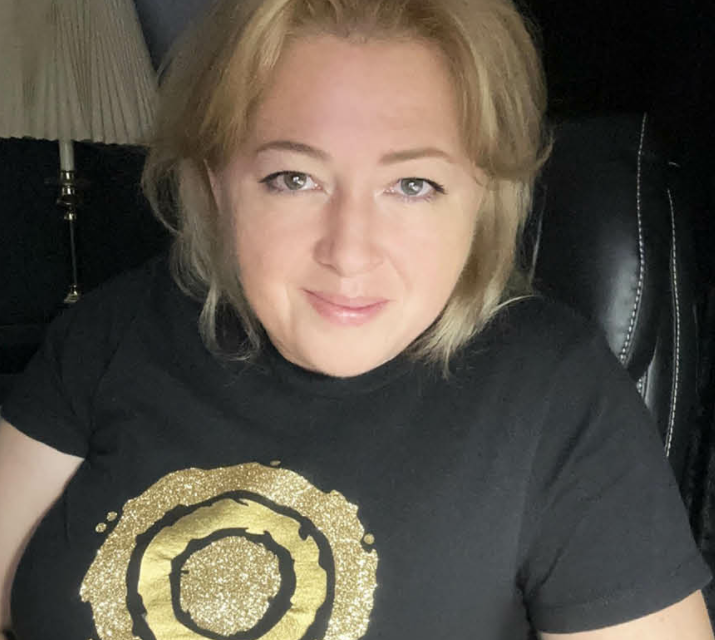
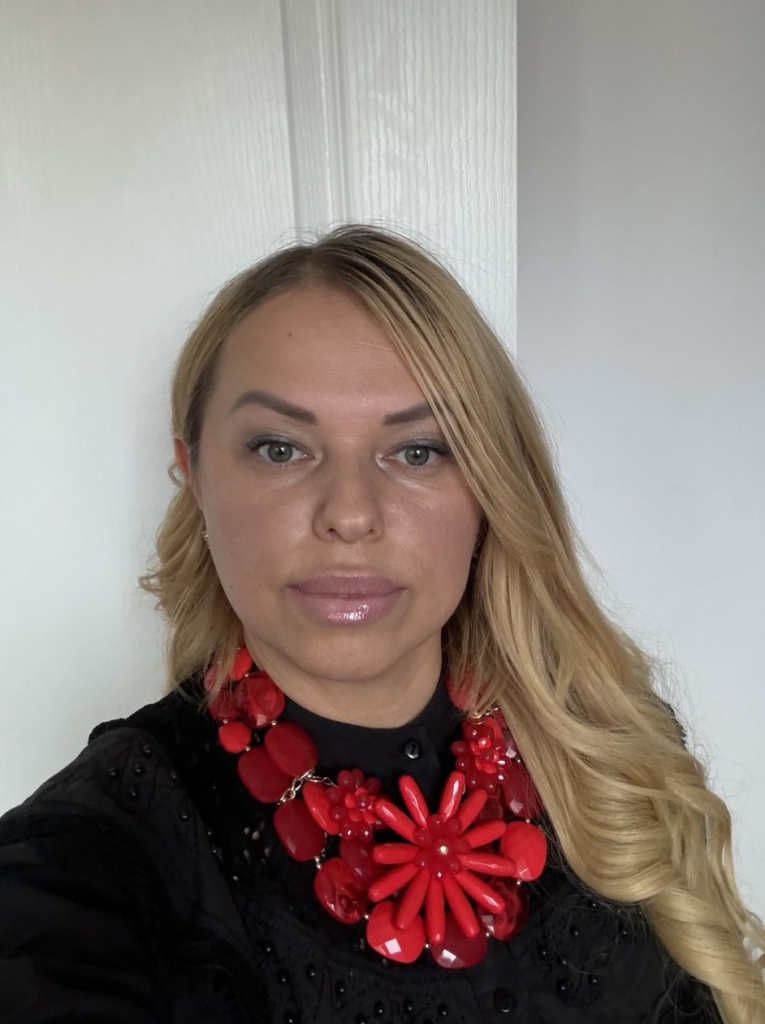
Natalia Javorska, born in Ukraine, started a new life in Poland more than three years ago. Her strength of character and determination led her to open a renovation and finishing company during the pandemic. When she received the Business Woman Awards last year, she said: “This is just the beginning. All the hard things are behind us, and the good times are only starting”. But then the war came. Natalia reorganized her life again to help her fellow countrymen, as she shared with Aneta Nagler.
 You’re working in a tough area of real estate, managing construction and renovation teams. How did it happen? And what does it look like from a woman’s perspective?
When I came to Poland 3.5 years ago, I started with cleaning. I worked in hotels and was hired to clean apartments after renovations. Visiting these places, I realized how inspiring apartment transformations can be.
They allow for creating a completely new space, different in color, light, and layout. I started to wonder if I could do this as a business. I have an artistic sense and had access to renovation crews. I also thought I could manage better than a man, because of how I see things. A man might focus on the size of a cabinet, but not think about how it fits visually. I do.
So, you opened your own renovation and finishing company. How many employees did you have?
I started the company in April last year. I worked with a few people from Ukraine. At first, the biggest challenge was construction terminology. I could explain things in Russian or Ukrainian, but it was harder to do so in Polish.
What does your work look like today?
I work with investors buying properties to flip, as well as housing cooperatives. We renovate staircases, garage entrances. I’m always looking for new contracts and participate in public tenders. I love when residents appreciate our work — like complimenting the tile colors. That matters to me. My investors are from both Poland and Ukraine.
What challenges do you face most often?
It’s frustrating when people don’t appreciate our work despite the effort. For example, scaffolding is set up in stairwells, but someone moves it while workers are away. The team then has to reset everything. It’s not a rare thing — it happens repeatedly, almost like someone’s doing it on purpose.
The pandemic didn’t stop the real estate market. Have you noticed major changes?
We had more renovation orders because people were buying new apartments — especially Ukrainians who were getting mortgages and settling in Poland. I think such projects will continue. I prefer working on new builds — we can plan and define the cooperation clearly. With older properties, surprises can pop up, like having to replace old pipes.
You started during the pandemic. Weren’t you afraid it would be hard?

I wasn’t afraid. I knew 100% I would succeed. That’s just my nature — I never give up. When it’s hard, I work even harder. I’m not afraid of tough jobs. I took on cleaning staircases in housing cooperatives. People were so grateful. After 30 years, someone finally cleaned their stairwell. I met many people during those jobs — some I’m still in touch with. I offered small repairs, and then came the first flips.
You received the Business Woman Awards 2021 last year. Does it have special meaning for you?
That award confirms I chose the right path. I’m glad others noticed and appreciated it. I got many calls with congratulations. People said, “If Ukrainians had awarded you, that would be nice — but expected. But you were recognized by Poles”. That’s a huge success. I’m proud of it.
To me, you are a strong, resourceful woman with a beautiful heart. You help your fellow countrymen. You organize buses to transport people. How can someone join your efforts?
I post all updates on Facebook, including what is needed most at the time.
Do you think Poles are passing the test of solidarity with Ukraine?

Yes. I’ve never met unkind Poles. In all my jobs, I’ve only met good people. Ukrainians who arrive in Poland are often moved to tears by the kindness they receive. It’s amazing how selflessly Poles help. I try to do the same. I help anyone who comes to me. I connect people. For example,
Agnieszka from Kraków offered her 3-room apartment to a Ukrainian family. Within two days, I found people to stay there — three women and four children. My son lives in Kraków and promised to help them settle in.
 What do you think of the disinformation from Russian media?
We have family in Russia — siblings, an uncle. They have no idea what’s going on here. They live in a different reality. The media lies. My Russian relatives say, “It’s all fake. Your soldiers are pretending to be ours”. Meanwhile, Russians come to Ukraine waving white flags, pretending not to shoot — and then they do. Ukrainians welcome them, and they get shot.
At the beginning, you coordinated with the mayor of your hometown, transporting people to Poland.
Yes. It started with 16 people. Then 32, then two groups of 50. Then 100, and now 250. Cars and buses constantly drove back and forth, bringing more people.
Where did you house all these people?
Some stayed at the border. There are many centers there. Volunteers helped transport people across Poland. The director of Hotel Warszawa – Ostrobramska helped a lot by hosting mothers with children.
There was help from individuals too?
Yes. Tatiana Pałucka took in a girl with two small children. Her brother-in-law picked up a 17-year-old boy who had no one but his mother, a doctor still in Ukraine. Imagine — 17, crying, doesn’t speak Polish. Tatiana, I, and a friend calmed him down. In the early days, I picked people up at the border and left them at social help points, like at Koźmiński University. Now there are many more locations — stations, arenas, Torwar — and many more people helping.
Besides organizing transport and housing, do you offer other kinds of support?
I help people from my hometown come on specific days. They organize and travel to the border, and I pick them up with a driver. I send them photos and messages about Poland, so they’re not afraid to come. I tell Ukrainians at the border that if a volunteer offers a bus to France or Sweden, take it.
Go where there’s a place to live — don’t fixate on Warsaw, Opole, or Gdańsk. Of the 250 who came through me, only five could afford a hotel. People crossed the border without passports or birth certificates. They left with kids and whatever they had. Only on the bus did they realize they had no documents or money. It’s very hard. But I do what I can. And I thank the Polish people for their open hearts and support for Ukraine.