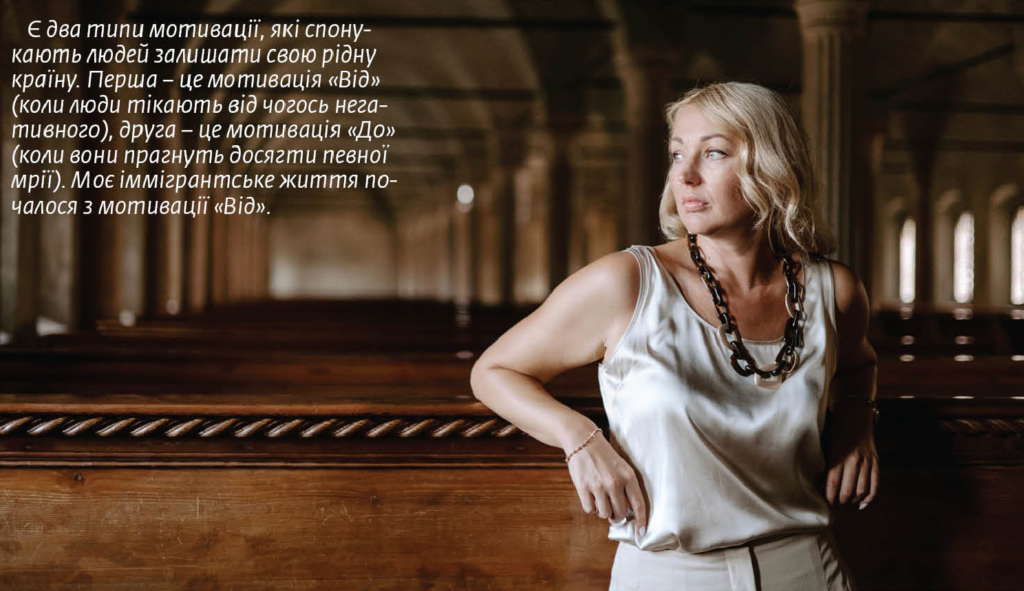

An interview with Anastasiia Yelizarova — the creator of a therapeutic method that redefines the notion of contact with the subconscious.
Anastasiia Yelizarova is a young, deeply empathetic, and brilliant specialist, the creator of the original therapeutic device «Shadow» (a registered trademark), which integrates psychology, the Gestalt approach, and neuroscience principles. Her device helps integrate repressed experiences into consciousness — and has already shown real results in work with people from different countries and backgrounds.
Anastasiia was born in Kherson in 2002. She lived and studied in Kyiv for some time, where she studied the Gestalt approach at the National Association of Gestalt Therapists of Ukraine (NAGTU), a nationally registered organization within the EAGT.
She received certification in Gestalt therapy, worked with children and adolescents, conducted seminars, and participated in professional conferences, including shuttles, where listeners were introduced to her method for the first time.
Anastasiia, how did your path in psychology begin?
My interest in psychology began in adolescence. I felt that there was always more to a person than they were aware of. I wanted to understand how consciousness works, why we react so differently, why patterns repeat. Later, I started studying psychology formally while simultaneously learning the Gestalt approach. That’s when I felt the power of the method — alive, genuine, and capable of helping a person live through, complete, and free themselves. It became my space.
 And fairly quickly, you began developing your own ideas. How did the concept of the «Shadow» device appear?
It happened gradually. I was interested in the topic of repression — how the parts we don’t accept continue to influence our lives. I studied how brain hemispheres work, how behavior forms, and how it can be gently changed through awareness. That’s how the idea arose to create something tangible, something one can hold. Something that helps you see yourself from the inside.
What does the device look like? Can it be used independently?
Yes. The “Shadow” is a physical device that has already been tested in practice and has shown significant results. It is currently being patented in Ukraine. Its form is symbolic and simple, yet incredibly functional. It is lightweight, compact, and convenient for transport — especially relevant in our dynamic times. You can take it on the road, to a session, or on a trip. Its essence lies in visualizing polar repressed experiences and in creating a support structure for trauma work, including PTSD.
Can you share practical examples where the “Shadow” proved to be most effective?
Of course. One of my clients — a soldier who returned from the combat zone — came with a request about “losing himself.” When we started working with the “Shadow,” the parts he had repressed for years came to life: fear, guilt, shame — but also tenderness, vulnerability, and love for life.
Anastasiia, you are already known outside of Ukraine. What do clients from the U.S. and Europe say?
My clients from Europe say the device gives them a sense of “personal space” where they can safely process the difficult. In the U.S., someone once wrote to me: “Your work is a bridge between the old methods of therapy and a new future where the body, symbol, and awareness are united into one.”
What personally inspires you to stay in this field?
I am inspired by the sense of deep meaning. In a world that is constantly changing, full of chaos, unfinished events, trauma, and war — therapy offers a chance. Gestalt gave me a foundation — when there is awareness, there is choice. And when there is choice, blind action disappears, and so does destruction.
To summarize, what is “Shadow” in your view?
“Shadow” is not just a device. It’s an invitation. An invitation to your true self. Without masks. Without fear of rejection. It’s a space where the repressed becomes part of the whole. Where support appears — not from the outside, but from within. In times when the world is unstable, inner support becomes the most valuable currency. And if my work helps even one person find their internal point of resilience — then it was all worth it.
Anastasiia Yelizarova’s work is an example of how personal sensitivity, deep knowledge, and creative courage can form the basis of an original therapeutic approach. Her “Shadow” is not only about therapy. It is about the return to wholeness, about the strength to be yourself — even in a world that changes every second.
New York, USA