
There are moments in life when destruction feels total. Not a loss that can be repaired with time or effort, but something burned to the ground: a country left behind, a profession interrupted, an identity fractured, a future rewritten without consent. For millions of Ukrainians today — both at home and in emigration — this is not a metaphor or a literary exaggeration. It is lived reality, unfolding day by day.
What makes this experience especially difficult is not only the scale of loss, but its comprehensiveness. When war, displacement, or forced migration enters a life, it rarely affects just one area. It touches language, work, social roles, family structures, and the quiet inner sense of who one is. Life no longer continues along a familiar line; it breaks, scatters, and demands reassembly.
And yet, across cultures, philosophies, and spiritual traditions, one idea returns with striking consistency: the human being has an extraordinary capacity to rise from the ashes. Not to restore what was, not to rewind time or recreate a former version of the self, but to become something new — often truer, deeper, and more resilient than before.
When Collapse Becomes a Beginning
In everyday thinking, crisis is almost always viewed as failure: something went wrong, something was lost, something should not have happened. But in deeper philosophical and spiritual perspectives, crisis is often understood differently — as a threshold.
The Austrian psychiatrist and Holocaust survivor Viktor Frankl articulated this insight with clarity born of experience:
“When we are no longer able to change a situa- tion, we are challenged to change ourselves”.
This is not a call for resignation or passive endurance. It is an invitation to inner responsibility. While we may not control circumstances — war, displacement, loss, political violence — we retain the power to decide who we become in response.
For immigrants, this moment is especially sharp. The old coordinates no longer work. Professional titles lose their currency. Social reputations do not transfer. Even ways of speaking, thinking, or presenting oneself may suddenly feel out of place. What remains is the person beneath these structures — often disoriented, sometimes frightened, but also unexpectedly free.
Collapse, in this sense, strips life down to essentials. And essentials, though uncomfortable, are fertile ground.
The Fire That Burns Away Illusion
In many spiritual traditions, destruction is not seen as punishment but as purification. Fire does not only destroy; it clarifies. It removes what is superficial and exposes what can no longer be avoided. The Persian Sufi poet Jalal ad-Din Rumi captured this paradox with poetic simplicity:
“Why are you so busy with this or good or bad; pay attention to how things blend”.
Sometimes, what collapses in crisis was already hollow. Routines that once felt secure may have been quietly suffocating. Roles that once brought pride may have long stopped reflecting inner truth. Crisis breaks walls we did not know had become prisons. The pain of this rupture is real and should not be romanticized. But so is the freedom that follows — the freedom of no longer having to pretend, maintain, or uphold what is no longer alive.
To rise from the ashes does not mean returning to the past. It means releasing outdated identities and allowing a more authentic self to emerge, often for the first time.
Suffering Does Not Transform — Awareness Does
It is important to speak honestly: suffering alone does not ennoble. It does not automatically make people wiser, kinder, or deeper. On the contrary, it can harden, exhaust, distort, or numb.
Transformation occurs only when suffering is met with awareness. The philosopher Jiddu Krishnamurti warned against unconscious endurance: “The crisis is not the problem; the problem is that we do not understand the crisis”. When pain is observed without denial, self-pity, or compulsive distraction, it begins to reveal uncomfortable truths: where we lived according to others’ expectations, where we clung to security instead of truth and where we confused survival with meaning
This process is rarely comfortable. It requires patience and a willingness to stay present with uncertainty. But in that clarity, something shifts. Not optimism, not positive thinking — but honesty. And from honesty, a new direction becomes possible.
Rebirth Is Not Heroic — It Is Quiet
Modern culture often glorifies strength: endure, overcome, move on. Social narratives reward visible success and dramatic comebacks. But genuine rebirth rarely looks heroic. More often, it is slow, uneven, and invisible to others.
The Advaita Vedanta teacher Ramesh Balsekar offered a disarming insight:
“Enlightenment is not the acquisition of power, but the loss of the illusion of control”.
Paradoxically, when the struggle to dominate life ends, inner stability begins. One stops fighting reality and starts responding to it intelligently, moment by moment. This is not weakness; it is groundedness. It is the quiet strength of someone who no longer needs to prove anything.
Rebirth does not announce itself. It unfolds in small decisions, subtle shifts in perception, and a growing alignment between inner truth and outer action.
The Ukrainian Experience: Renewal Without Pathos
For Ukrainians today, the theme of rebirth carries particular weight. Displacement, professional reinvention, emotional fatigue, and the burden of representation all converge. Many feel compelled to be strong not only for themselves, but as symbols — for family, for country, for history.
Yet perhaps this moment is giving rise to a new Ukrainian identity in the world: not defined solely by trauma, not reduced to symbols or suffering but grounded in agency, dignity, and inner freedom. This is an identity that does not deny pain, but does not live inside it either. It allows grief without turning it into a permanent home. It recognizes loss without surrendering the future. To begin again does not mean erasing the past. It means refusing to be imprisoned by it.
Personal Experience: Returning to One’s Own Roots
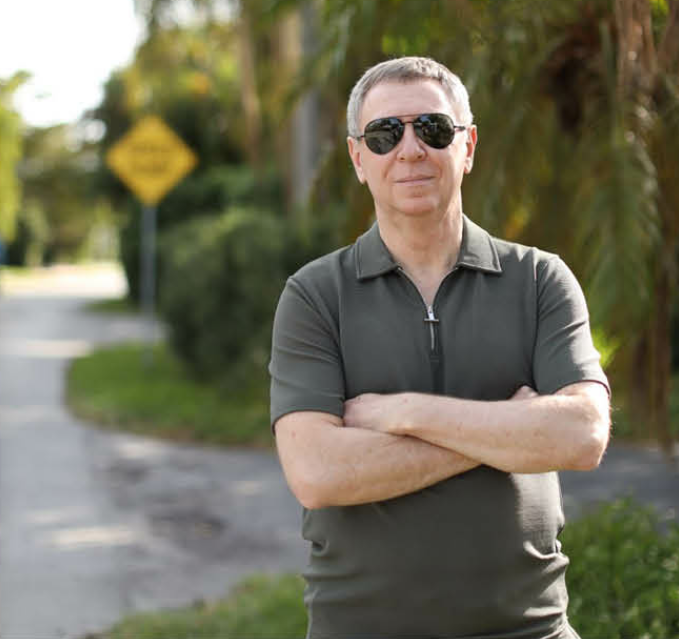
For me, the theme of renewal carries a deeply personal dimension. I began to truly discover the Ukrainian cultural code only at the age of forty-four — an age at which one is often considered already “fully formed”. This return was not the result of external pressure or abstract reflections on identity. It emerged through a living human connection.
My wife is Ukrainian. Through her natural, quiet sense of belonging to Ukraine — through her love for the language, the culture, the history, and the very feeling of Ukrainianness — there gradually awakened in me a desire to explore what for a long time had remained in the background: an unexamined inheritance. It was not a sudden awakening, but rather a gentle inner movement that, over time, grew into a steady aspiration.
I began to hear the language differently, to notice cultural meanings, to approach history not as a collection of facts but as the living experience of my lineage. What had once seemed secondary or “optional” suddenly acquired depth and significance. I came to understand that cultural identity is not a matter of age and not a formality, but a process of self-recognition — one that can begin at any point in life.
This path is not about guilt for what was previously unknown, nor about a heroic “return”. It is about a mature, conscious acceptance of one’s roots — without pathos, but with respect. And perhaps this is how many people today come to discover Ukraine within themselves: not because they “must”, but because they are inwardly ready.
Resurrection from the Ashes of Immigration
Immigration is often perceived as a loss: of status, familiar surroundings, professional continuity, even language. Yet over time, a different understanding emerges. Immigration is not only a rupture; it is a transition. A space in which a person, stripped of former supports, is compelled to search for new meanings — and in doing so, discovers their true self.
In this sense, resurrection from the ashes of immigration happens not in spite of difficulties, but because of them. When external props disappear, what comes to the foreground is the inner core: resourcefulness, ingenuity, the ability to adapt and to create. These qualities are historically inherent to the Ukrainian cultural code — *ingenuity*, the ability to find solutions where none seem to exist, and the drive for self-expression not only in words, but in action.
For many Ukrainians abroad, business becomes more than a source of income; it becomes a form of expressing identity. Through entrepreneurship, startups, consulting, and creative projects, a person does not lose themselves — they translate their culture into a new language: the language of initiatives, venture projects, and responsibility for one’s own path.
When combined with the favorable business climate of the United States — transparent rules, access to capital, and respect for ideas and initiative — Ukrainian entrepreneurial spirit gains scale. Here, not only survival and adaptation are possible, but growth and leadership. Immigration, in this context, ceases to be a story of loss. It becomes a story of bringing forth the best: diligence without aggression, flexibility without the loss of principles, and the courage to start from zero.
This is how Ukraine is present in the world today — not only through pain and trials, but through people who rediscover themselves and transform this journey into value for others.
And if along this path there arises a need for self-determination, for calm and human support — moral, intellectual, or simply the opportunity to be heard — you are welcome to reach out to me. I do not offer ready-made formulas, but I am willing to share my own experience of living through immigration, searching for meaning, and building a new life without losing inner integrity. Sometimes, that is enough to move forward not blindly, but consciously.
From Ashes Emerges the Essential
The phoenix is not a symbol of immortality. It is a symbol of courage — the courage to burn, to let go, to surrender what no longer lives. Those who have passed through loss are no longer the same. But that difference does not have to mean damage. It can become depth, perspective, and quiet authority. Not everyone who falls is broken. Some are simply freed from what was false. And perhaps this is humanity’s quiet miracle: the ability to rise — not despite life’s fire, but because of it.