

The history of human thought is, in many ways, the history of the search for truth. For thousands of years people have tried to understand how thinking works, what rules govern correct reasoning, and how truth can be distinguished from error. From this intellectual quest emerged logic — the science that studies the forms, laws, and methods of correct thinking.

Today logic forms the foundation not only of philosophy but also of law, mathematics, programming, and even artificial intelligence. Yet the path toward our modern understanding of logical reasoning has been long and intellectually fascinating.
The Eastern Origins of Logical Thought
The earliest structured systems of logic appeared in ancient India and China.
In India, the Nyāya school developed an elaborate system of inference consisting of five components, unlike the three-part syllogism later formulated by Aristotle.
For Indian philosophers, logic was not merely an intellectual discipline but also a path toward spiritual liberation. The discovery of truth was seen as a means of achieving inner freedom.
In ancient China, logical thought was closely connected with questions of social order and governance. The Mohist philosophers studied causality and analogy, while the School of Names analyzed the relationship between language and reality.
Thus, from the very beginning logic served both as a tool for understanding the world and for organizing human society.
The Birth of Formal Logic in Ancient Greece
A decisive breakthrough occurred in ancient Greece.
Philosophers such as Parmenides explored the principle of identity, while Zeno of Elea famously developed paradoxes that revealed contradictions within human reasoning. Socrates introduced the method of dialectical inquiry, guiding his interlocutors toward truth through structured dialogue.
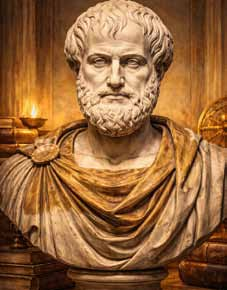
However, it was Aristotle who transformed logic into a systematic science. In his work Organon, he described the structure of correct reasoning and introduced the concept of the syllogism — a deductive method for deriving conclusions from general premises.
Aristotle also formulated three fundamental laws of logic:
- the law of identity;
- the law of non-contradiction;
- the law of the excluded middle.
These principles shaped rational thought for centuries.
Medieval Logic and Scholastic Thought

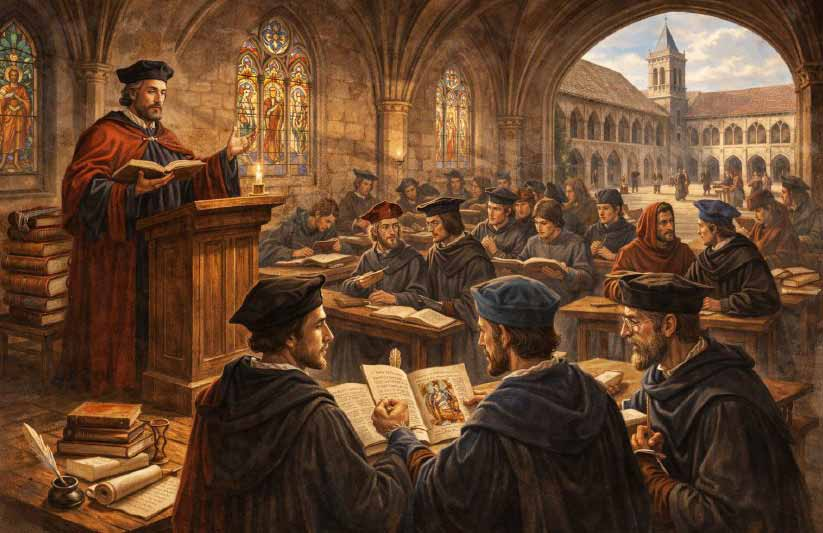
During the Middle Ages logic became a central element of education and formed part of the “trivium,” together with grammar and rhetoric.
Scholastic philosophers used logical analysis to address theological questions. One of the central debates concerned the problem of universals — whether general concepts exist independently of particular objects.
William of Ockham introduced the famous methodological principle now known as Ockham’s Razor: entities should not be multiplied beyond necessity.
This idea remains one of the fundamental guidelines of scientific reasoning.
The Rise of the Scientific Method
The Renaissance brought criticism of scholastic logic and encouraged new approaches to knowledge.
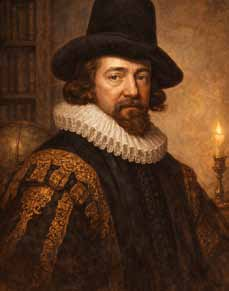
Francis Bacon emphasized the importance of induction — reasoning from particular observations toward general laws. His work Novum Organum became a manifesto for the emerging scientific method.
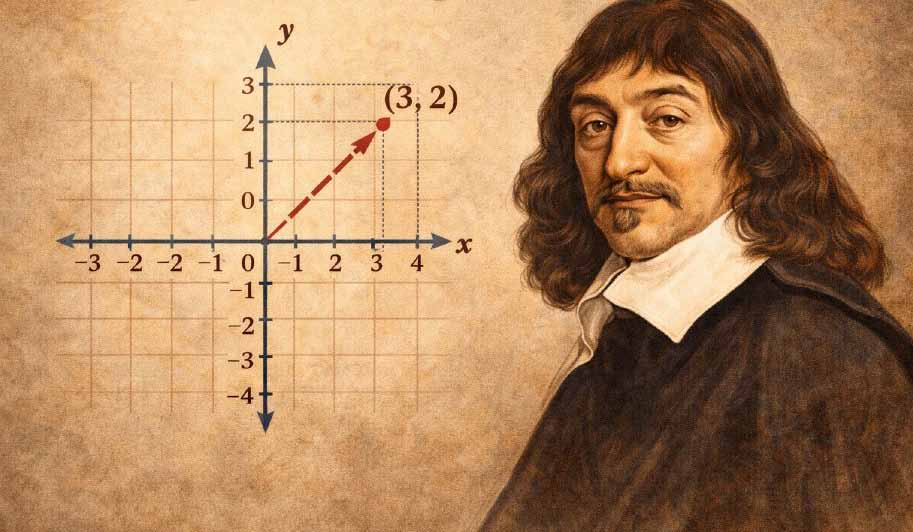
René Descartes, in contrast, championed deduction based on clear and self-evident principles. His famous statement “Cogito, ergo sum” symbolized the power of rational thought.
During this period logic increasingly became a universal instrument of scientific inquiry.
The Mathematical Turn in Logic
In the nineteenth century logic underwent a profound transformation.
Gottfried Wilhelm Leibniz envisioned a universal symbolic language that could resolve philosophical disputes through calculation. His famous motto was simple: Calculemus! — “Let us calculate.”
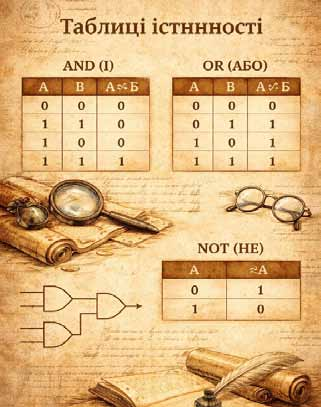
George Boole later created the algebra of logic, introducing formal operations such as AND, OR, and NOT. These principles became the foundation of modern digital computing.
Gottlob Frege further advanced logic by developing predicate calculus and a theory of meaning, laying the foundations of modern logical semantics.
Logic in the Twentieth Century
In the twentieth century logic became a central discipline of analytic philosophy.
Bertrand Russell attempted to reduce mathematics entirely to logic in his monumental work Principia Mathematica.
Ludwig Wittgenstein later argued that logic reflects the structure of reality itself. According to him, the world consists not of things but of facts.
Modern Logical Systems
Modern philosophy has developed many new logical systems, including many-valued logic, modal logic, and deontic logic.
Deontic logic, which studies concepts such as obligation, permission, and prohibition, has become especially important for legal theory.
These systems allow scholars to analyze law, language, and reasoning with greater precision.
Logic and Artificial Intelligence

Today logic forms the backbone of algorithms, programming languages, and artificial intelligence systems. Machine learning models and neural networks rely on sophisticated logical structures for analyzing data and making decisions.
In this sense, a discipline that once emerged from philosophical debate has become one of the intellectual foundations of modern technological civilization.
Conclusion
The history of logic is the history of the human mind itself. From ancient philosophical schools to modern computer algorithms, logic has remained humanity’s most powerful tool for seeking truth.
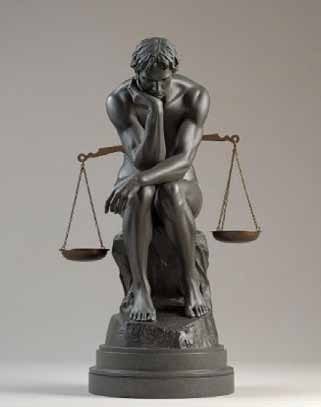
For lawyers in particular, logic is not merely an academic subject but the foundation of professional reasoning. Legal argumentation, evidence analysis, and judicial decision-making all depend on rigorous logical structure.
Perhaps logic is, ultimately, the language through which reason itself speaks.