As a child, I had two dream professions: ballerina and astronaut. Then I decided there was no need to choose. In my head, there existed the perfect job title: a ballerina on a spaceship, saving the crew from boredom and homesickness for Earth.
Now I understand it was not really a fantasy about space. It was a premonition about a world with no support, where you still have to keep your balance. Ballet, if you strip away the tutus and myths, is exactly about that.
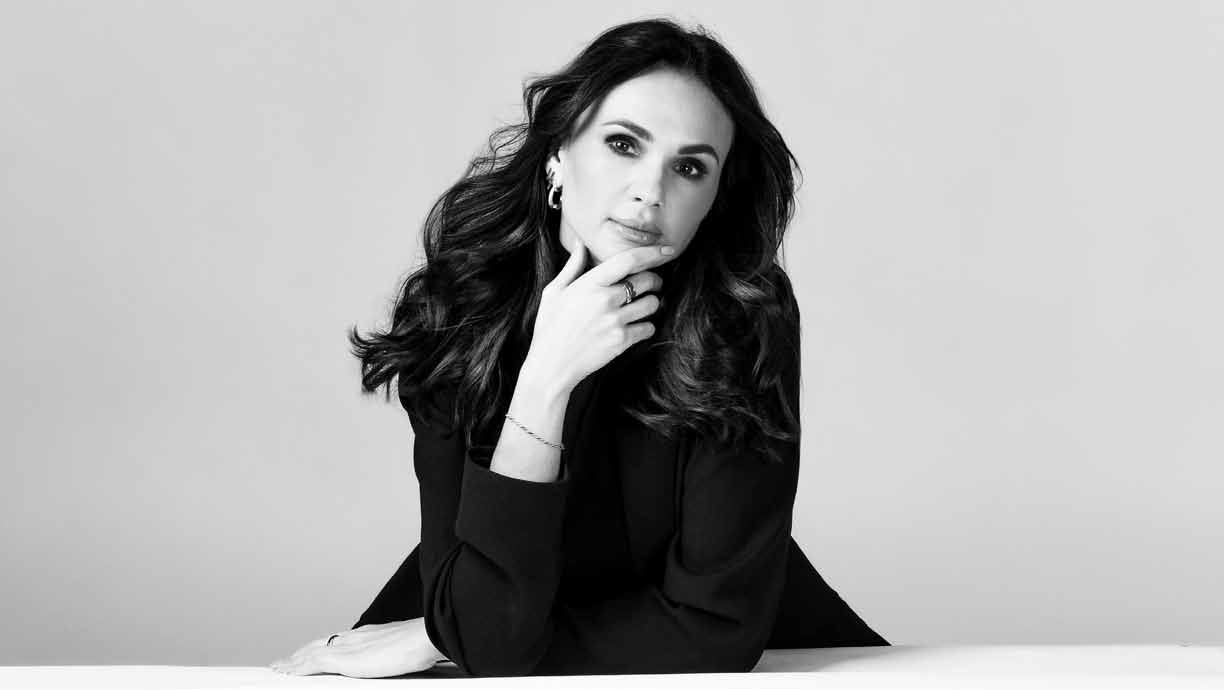
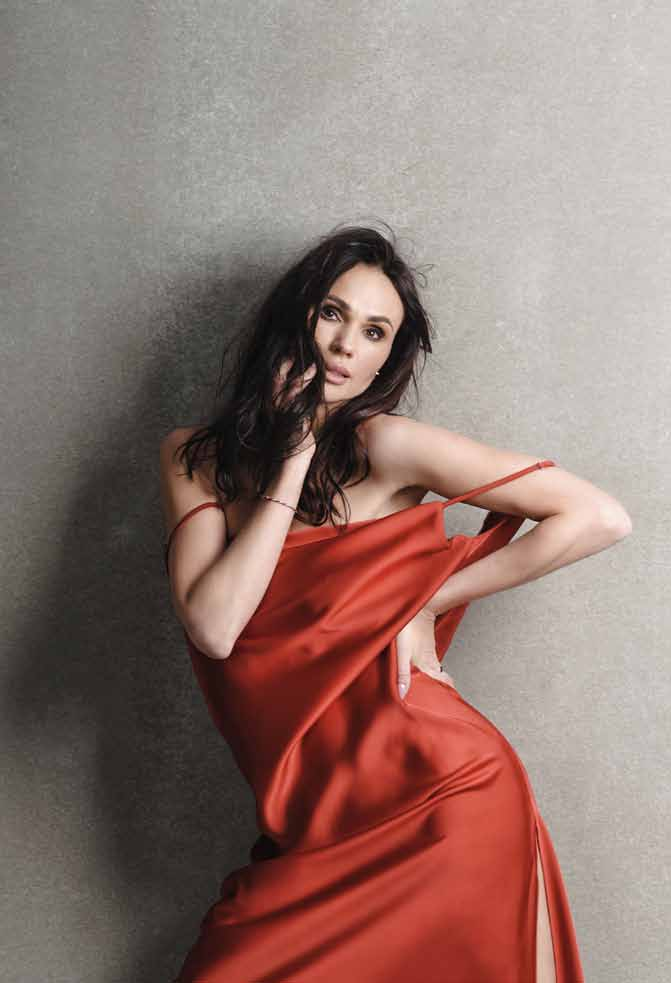
My name is Kseniya Novikova. I was born in Kharkiv, studied in Kyiv, danced at the National Opera of Ukraine, worked in Korea and in different countries across Europe, and now, together with the Ukrainian International Ballet, we are building a dialogue of cultures in the Netherlands. It sounds like a neat biographical line, but in reality it is a chain of decisions that sometimes look irrational and yet almost always feel exactly right, later turning into experience and emotion. And I truly believe life is too short to live it any other way than the way you want.
1. Kharkiv: theatre as a form of escape
My aunt was a ballerina, so part of my childhood happened not in “childhood” as such, but in the Kharkiv theatre: classes, rehearsals, corridors, waiting by doors, the smell of make-up and rosin, and the feeling that walls can remember. The theatre was a place where everything made sense: if you work, you become better; if you repeat, you grow professionally.
Home was harder. My parents are musicians, but the atmosphere in our family was often tense. Children have a strange talent for taking on what does not belong to them. When adults argue, a child can easily decide: “it’s because of me”. And then the theatre becomes not a beautiful fairy tale, but a real lifeline.
At nine, I came to study at the Kyiv State Choreographic School. Nine is an age when a suitcase feels bigger than you. But it was my desire and a conscious step. I always wanted to grow up faster, to become independent and not depend on my parents’ decisions. So the boarding school did not scare me. Quite the opposite: I walked in with impatience and by my own choice, because it felt like real life, without constant limits and with the sense that you are responsible for your own life.
2. Kyiv: discipline that knows how to love
From the outside, ballet school often looks like a strict science: the barre, rules, lines, constant remarks. But in- side it there is a strange tenderness. Not the kind that “hugs” you, but the kind that says: if you endure now, tomorrow you will be able to do more, you’ll see.
I learned early not to wait for inspiration. In ballet, inspiration comes when you have repeated the same thing a hundred times and then, suddenly, you do it honestly.
At seventeen, I entered the National Opera of Ukraine. For some, that is the final point of a dream. For me, it was the beginning of an adult conversation with the profession: the stage tests not only your professional skills, but also your character. The stage shows who you are when you are tired, when you are afraid, when it does not work. It does not take revenge, it simply exposes you.
Somewhere around then, my old “space” part showed itself: I always wanted to widen my orbit.
3. Seoul: why growth sometimes requires an unserious step
A few months after I started working in the theatre, I decided to audition for the musical The Phantom of the Opera in Seoul. It sounded almost like “betrayal” of an academic career. People told me so: you got your chance, and now you’re leaving to dance in a musical?
But what mattered to me was something else: I wanted to see the world, another system, another rhythm, another kind of stage discipline. I completed the contract there (ten months) and understood a great deal about myself. For example, that “light genres” sometimes demand even greater precision: there is less room for pathos and more responsibility for every millisecond of what is happening.
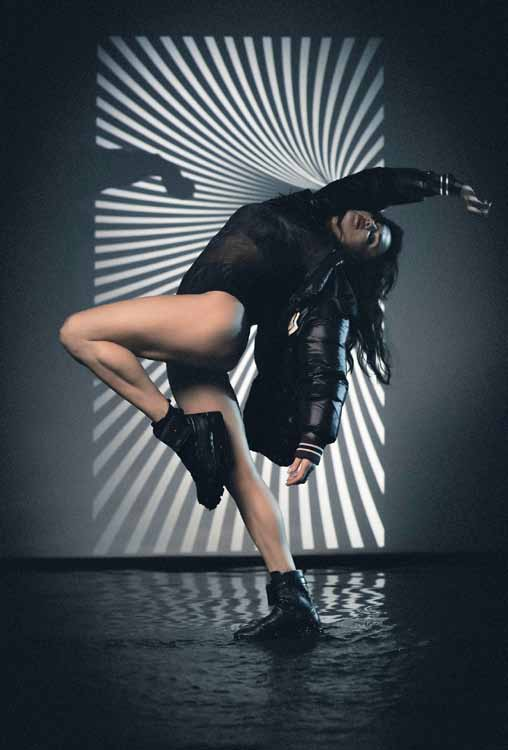
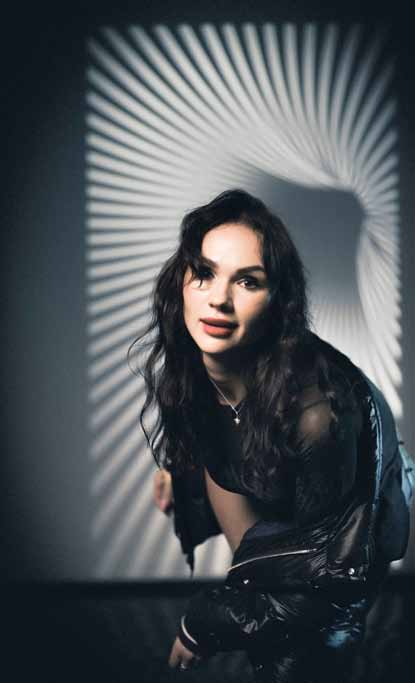
I returned to Kyiv and to my home theatre. I never viewed a career as a ladder “from bottom to top”. More like a metro map: sometimes, to get where you need to be, you have to change lines, and it looks strange only to those who do not know your final station.
At the same time, my personal life was growing. I have three children, and that is also part of my profession, paradoxical as it may sound. A dancer’s life in reality is not divided into “stage” and “everything else”. It is mixed together: rehearsals, school, logistics, exhaustion, joy, and sudden questions like, “why can’t the costume be washed like a normal T-shirt?”
And somewhere between rehearsals and “Mom, where is…?” I always had another curiosity: how the processes around me work. I love learning as a way to keep my mind alive. At some point, I began exploring AI tools, and I took a course in the basics of front-end and back-end programming simply to understand the mechanics of the digital world, which increasingly affects art as well.
4. Tessno: hearing an orchestra inside electronic music
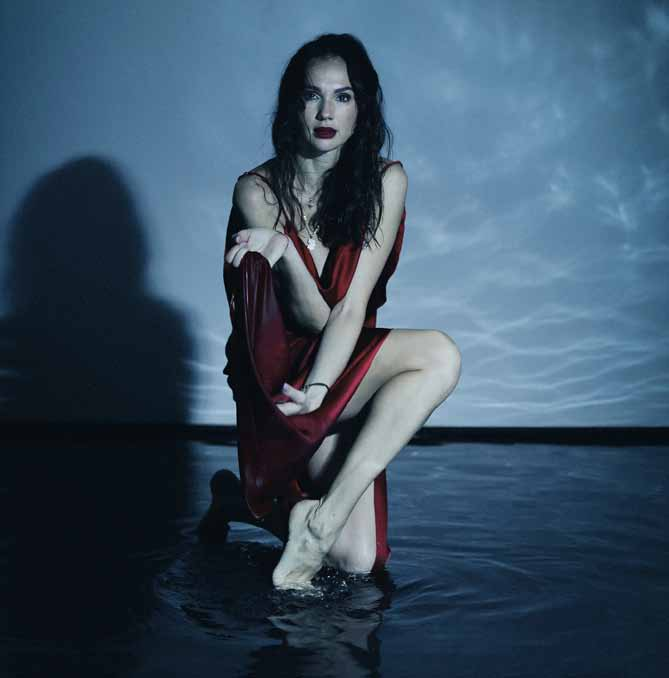
Almost right before the war, I had my own project, Tessno. Tessno is when ballet meets a symphony orchestra and electronic music, and nobody tries to “re-educate” anyone. I have always adored classical music: the orchestral sound, its emotionality and depth, the way it holds a vast inner volume. The very same qualities fascinated me in electronic music: incredible depth, complex textures, intensity and tenderness, only expressed through different means. And at some point I thought: how wonderful it would be if this could be combined, and if those emotions could be danced on stage.
That is how Tessno was born. We had two shows. The second was called Biom: ballet, electronic music and orchestra in one breath. For me, it was a period I still remember as the happiest. Not because “everything was perfect”, but because everything was alive and in its place: I was realizing dreams, I had a family, a profession, I was working in a prestigious theatre, and at the same time I had my own “child”, which began to grow faster than I could even process. Proposals appeared, new venues, ideas and invitations from different corners of Ukraine and beyond. It felt like I was riding a rainbow on a golden unicorn…
On February 21, we danced until morning in one of Kyiv’s clubs, celebrating my birthday with a big group of close friends, and I caught myself thinking that, perhaps, this was one of the happiest periods of my life.
And on February 24, at 5 a.m., my usual breakfast was interrupted by the sound of explosions. The war began.
5. February 2022: when you are not there
There is something that is hard to explain to people outside the profession: when you are an artist, your “self” is tied to the regularity of the stage and of work. And when that system collapses, it feels as if someone switched you off. I remember a very clear thought: my life had disappeared. Not dramatically, not “poetically”. Simply as a fact: the theatre closed, the city became dangerous, even the most ordinary things suddenly became inaccessible.
I grabbed my family, and we managed to get to Portugal.
The contrast turned out to be unexpectedly hard: peaceful life continued around you, but inside you were still at war. I could not simply live on, I wanted to do at least something that made sense. So I returned to the border with Ukraine and drove people and belongings from the border to different parts of Europe. Almost a month and a half behind the wheel made it possible not to lose my mind and to be useful. It does not save the world. But sometimes it saves a particular person. And sometimes it saves you from the feeling of being useless.
6. The Netherlands: a big family, and the budget of a fairy tale
Later I learned that the Dutch ballerina Igone de Jong, together with other caring Dutch people, had created a company for Ukrainian dancer-refugees: the United Ukrainian Ballet. That is how I ended up in the Netherlands.
There were many of us, 65 dancers from all over Ukraine, with and without experience, very young and already mature artists. We lived and worked together like a huge family. We rehearsed in the building of a former conservatory in The Hague that was meant to be demolished, but for a year it became our home. We worked with renowned choreographers and went on tours. I can honestly call that period a “fairy tale”, but not because it was easy. Rather because, in the reality of war, an oasis of support and creativity suddenly appeared, where art regained meaning and strength.
Fairy tales, however, depend on budgets. The project closed due to a lack of funding. And that was the moment when we could have dispersed and become “each on their own” again. But we still had a community, experience, an audience, rehearsal spaces, and, most importantly, we still had a reason to continue.
That is how the Ukrainian International Ballet came to be.
7. Ukrainian International Ballet: not a project about war, but about a human being
Today, UIB is about fifteen dancers. We rehearse in The Hague, perform in the Netherlands, Germany and Belgium, and we are preparing for new countries.
To survive, many of us work in very ordinary jobs alongside this: someone delivers food, someone works as a waiter, someone teaches Pilates or dance. This is reality, without romanticising it.
But on the days when we have the chance to perform, everyday life recedes like noise behind a closed door. We step on stage and return to our natural state as artists. As people capable of speaking to an audience about the most intimate things without a single word.
It is important to me that UIB is not a “sentimental letter”, but a living dialogue. We speak to European audiences not with slogans, but with a language that needs no translation: movement, music, image. We do not lock ourselves into reflection on Ukrainian realities, and we do not aestheticise war. We invite cultures into dialogue, we collaborate with Dutch and Ukrainian choreographers, because culture can influence the physical world when it opens space for something shared.
8. INdependent 24: how gratitude sounds on stage
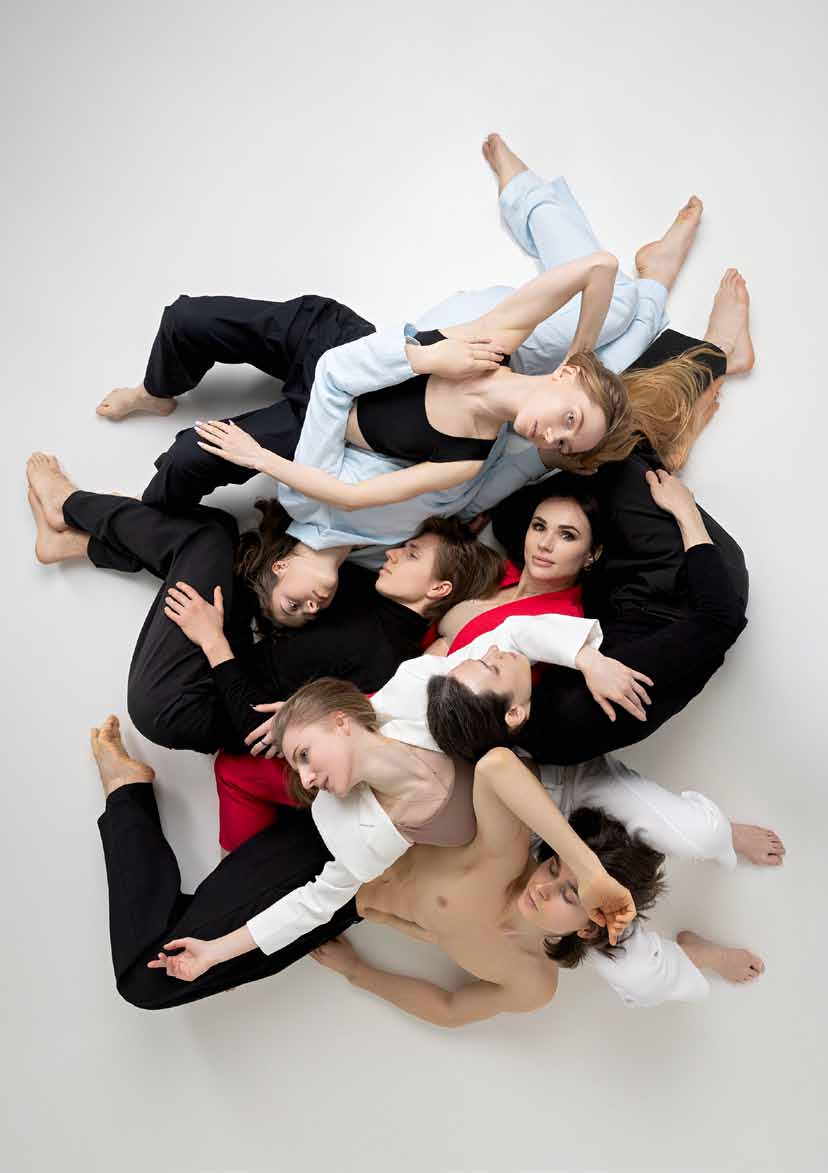
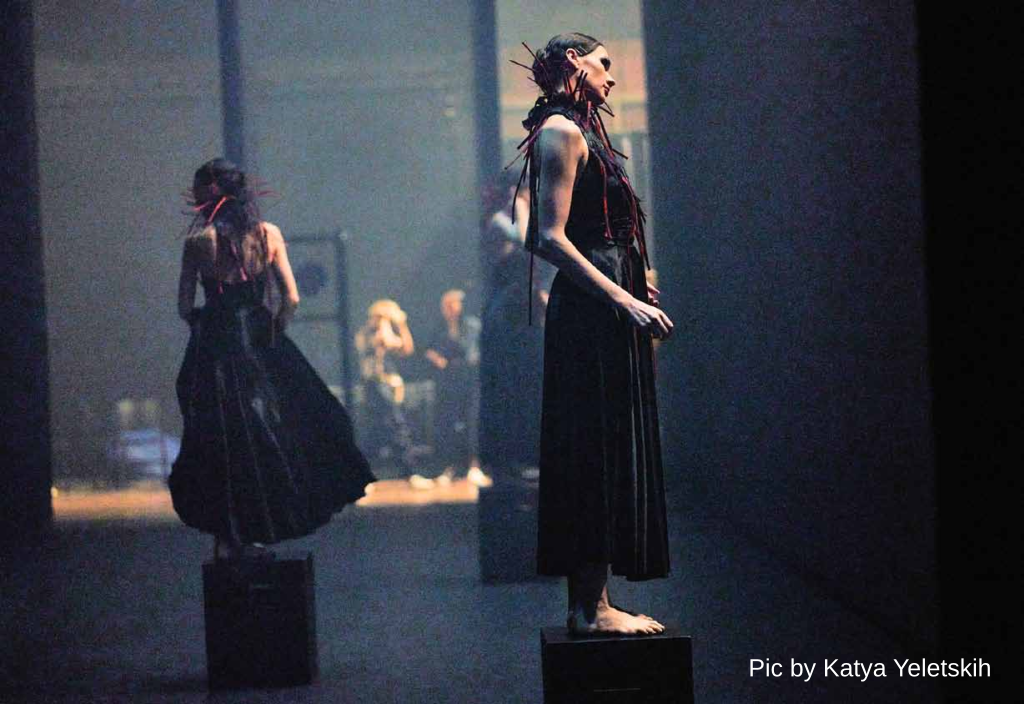
One of our key works is INdependent 24. It contains the theme of war, but it also contains something else, very important: gratitude to the Netherlands for its support and for the search for points of connection between cultures.
In the performance there is a section created by the Dutch choreographer Rishèl Wieles. And there is an episode that, for me personally, became an ethical exam: the participation of the Ukrainian veteran Andriy Siromakha, who sustained severe injuries at the front at the age of 22.
In this scene he is not a “symbol” and not “scenery”. He is the main protagonist. We, the dancers, do not “play” his story; we create a space where his presence is the central meaning. Sometimes a single movement of a raised arm says more than ten pages of text: strength, dignity, the stubborn “I am here”.
In the finale, a well-known Dutch song, Mag Ik Dan Bij Jou, is heard, with the words “when the war began…”. For the Dutch audience, this melody is their own, familiar. And in that moment I especially love the silence in the hall: not theatrical, but real. It is that rare case when two cultures do not compare themselves, but recognise and accept one another.
9. Working with veterans
Working with military people and with those who have amputations is a great honour for us, but it has also brought many challenges. And yet the inner strength and light of our soldiers, their willingness to work on themselves and expand the usual boundaries of life, helped us achieve a truly powerful result together. For our team, it is important that the stage returns agency to a person, rather than turning their pain into “material”.
I remember touring in Berlin, where we performed together with the Ukrainian soldier Yevhenii Syvolap, who has a triple amputation. At first he was very closed and shy, as if he felt uncomfortable in the dance environment. But on stage a transformation happened: he danced, he was an artist! And this is not a “beautiful image”. It is the result of colossal inner work and change. In moments like these you understand that art can be an instrument of recovery no less important than physical recovery, namely mental recovery.
10. “Past | Present | Future”: an imaginarium of artistic encounters
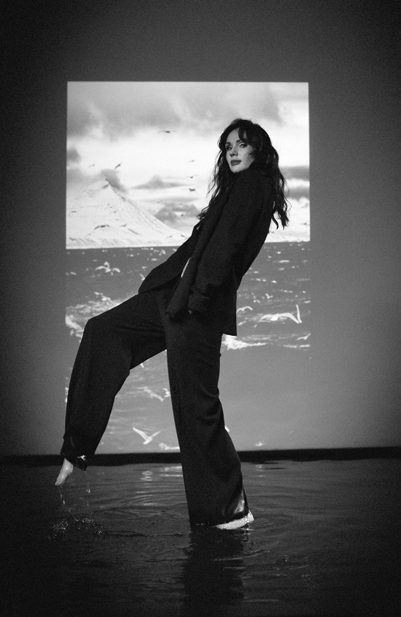
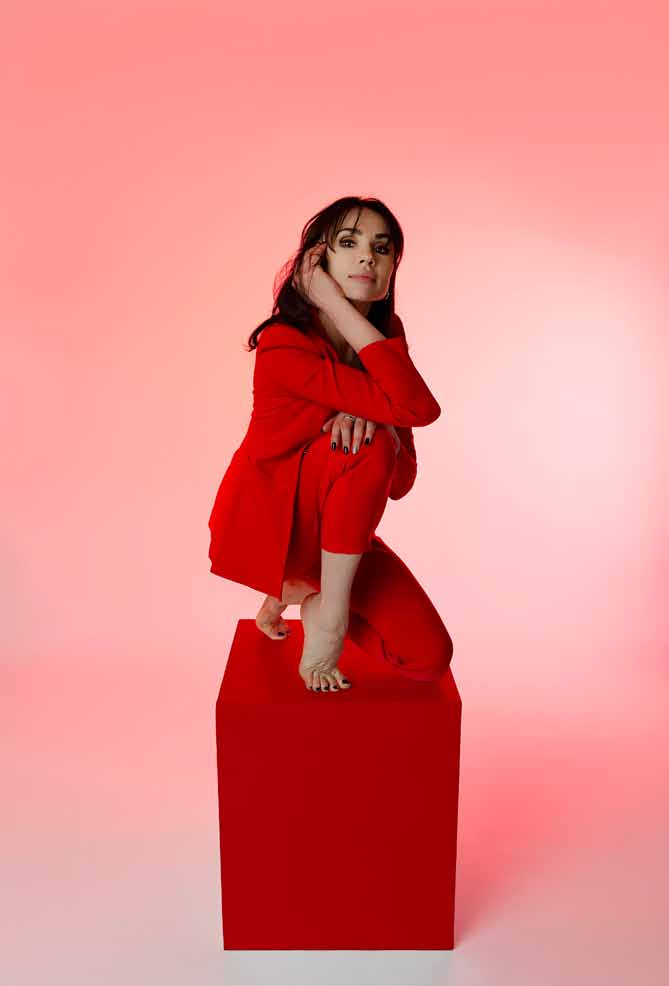
Our second major project is called “Past | Present | Future”, authored by our creative and artistic leader, Vladyslava Kovalenko. Here we consciously move away from direct talk about war. It is a performance about culture as a way of dialogue.
In one part we staged an onstage “meeting” between Alexandra Exter and Piet Mondrian. It is a fantasy: what if they spoke as artists. What would they argue about? Where would they agree? Where would they see a shared vector?
In parallel, we create informational exhibitions about Ukrainian artists whose names have been appropriated by Russian narratives. It matters to me that European audiences see Ukraine not as war news, but as a cultural reality that has long been, historically, a part of Europe.
11. A body that asks questions, and plans that still live
Right now I have a ligament injury and I need surgery. For a ballet artist, legs are the instrument of being yourself, and going through injury is psychologically especially difficult for any performer. I do not know whether I will be able to return to full performances as before. But I have many plans and a significant layer of organisational work.
We are developing a new project: a series of patronage concerts with the aim of bringing classical and contemporary, Ukrainian and international art together again, for one main purpose: to raise funds to help children in Ukraine. We will have to work hard, but the reason is a powerful motivation.
A ballet company does not survive on inspiration alone. In our case, it stands on an idea, shared values, on my dear team (Iryna Khutorianska, PR/SMM director; Vladyslava Kovalenko, Artistic/Creative director; Dmytro Borodai, choreographer and development manager), on human relationships and respect. And on 100,500 tasks, too 🙂
And sometimes, in moments of exhaustion, I remember that childhood idea about a ballerina in space. Back then, it seemed the main thing was to get onto the ship. Now I know the main thing is to find balance even in zero gravity, and to turn uncontrolled drifting into a guided, swift flight toward a dream. Because dreams become goals.