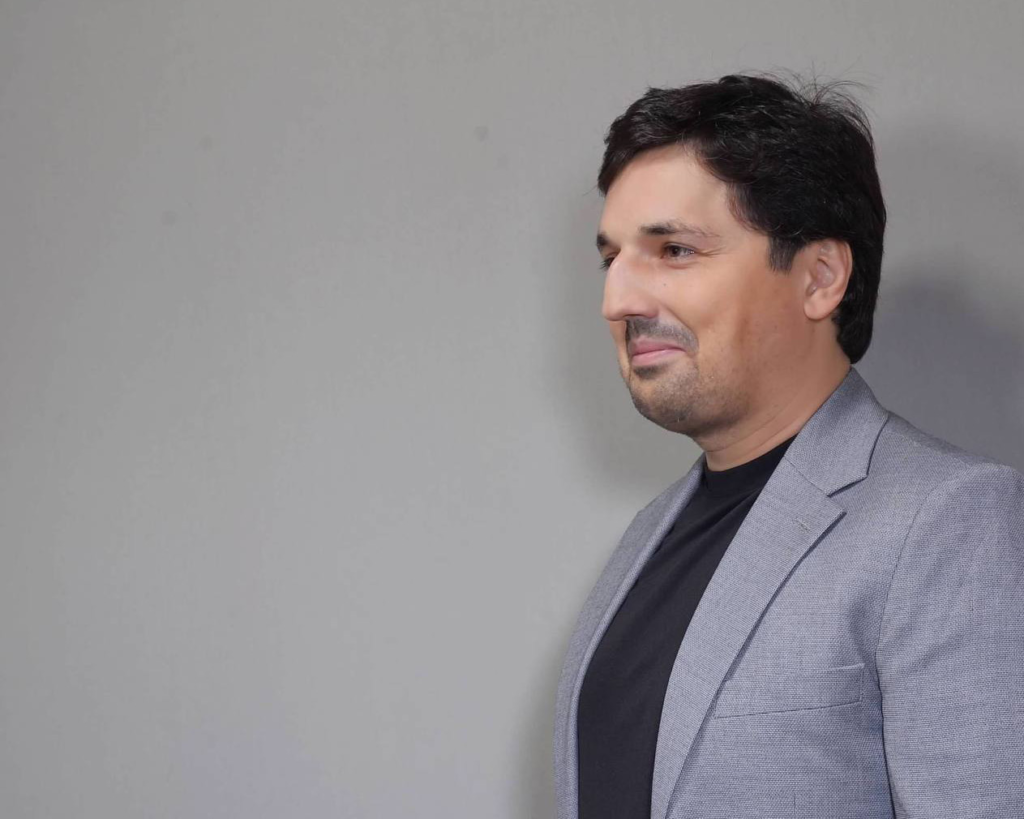
From Ukraine’s culinary records to innovative technologies for the American market: Ukrainian restaurateur, inventor, and entrepreneur Ruslan Myronov discusses his 17-year journey in business, his patented invention, energy efficiency, the economic potential of innovation, and the promotion of Ukrainian culture worldwide.
The Ukrainian restaurant industry has long evolved beyond the boundaries of traditional gastronomy. Today, its representatives are building international brands, developing technological solutions, introducing new business models, and demonstrating Ukraine’s economic and cultural potential to the world.
Among these entrepreneurs is Ruslan Myronov, a restaurateur with more than 17 years of professional experience, a member of the Restaurateurs Guild, an organizer of major gastronomic festivals, including Halytska Defiliada, Korop Fest, and Ternopilska Brama, a participant in record-setting culinary projects, and an inventor.
His professional journey began in Ternopil, Ukraine, and today also extends to New York City — one of the most demanding and competitive restaurant markets in the world.
A particularly important dimension of his professional activities is technological entrepreneurship. In 2026, Ukrainian Utility Model Patent No. 164243, entitled Pizza Baking Oven, was published. Myronov’s scientific research focuses on improving the energy efficiency of professional kitchen equipment and optimizing food preparation technologies.
In this exclusive interview with Ukrainians and the World, Ruslan Myronov discusses how the restaurant business is evolving into a technology-driven industry, why gastronomy has become an instrument of cultural diplomacy, and how Ukrainian innovations could contribute to the economic development and national interests of the United States.
1. Mr. Myronov, you have worked in the restaurant industry for more than 17 years. How did your professional journey begin, and what principles have been fundamental to your entrepreneurial success?
Ruslan Myronov:
For me, the restaurant business has never been limited to preparing food or providing hospitality services. I have always viewed it as a complex entrepreneurial ecosystem in which economics, management, marketing, technology, and consumer psychology are closely interconnected.
Over more than 17 years in the industry, I have learned that a successful restaurant begins with an idea, but its long-term sustainability depends on strategy, discipline, and the ability to adapt to change.
The restaurant industry is one of the most competitive sectors of the economy. It is impossible to operate successfully for years while relying on an unchanged business model. Consumer preferences evolve, production costs fluctuate, technologies advance, and customer expectations continue to rise.
An entrepreneur must not simply react to these developments but anticipate them.
An essential part of my professional journey has been the ambition to create more than individual restaurants or events. I have always sought to develop projects capable of shaping new markets, strengthening regional economies, and promoting Ukrainian gastronomic culture.
I firmly believe that true entrepreneurial success should be measured not only by financial performance but also by the value a business creates for society.
This principle defines my approach to entrepreneurship and my ambition to develop projects with international potential.
2. You organized major gastronomic festivals, including Halytska Defiliada, Korop Fest, and Ternopilska Brama. What impact did these initiatives have on regional economic development and Ukraine’s attractiveness as a tourist destination?
Ruslan Myronov:
When we began developing gastronomic festivals, our ambitions extended far beyond organizing large public events.
 Our objective was to demonstrate that Ukrainian gastronomy could become an independent tourism product — one capable of attracting visitors, stimulating entrepreneurship, and generating additional economic opportunities for local communities.
Projects such as Halytska Defiliada, Korop Fest, and Ternopilska Brama brought together restaurateurs, food manufacturers, farmers, artists, tourism professionals, and local entrepreneurs.
A gastronomic festival is essentially a temporary economic ecosystem.
It generates demand for locally produced goods, logistics services, hotels, restaurants, transportation, and a wide range of related businesses.
Beyond their immediate economic impact, such events create long-term marketing value by strengthening a city’s identity and establishing its reputation as a gastronomic destination.
For me, it was particularly important to demonstrate that Ukrainian regions possess distinctive cultural and culinary identities that can successfully compete for international tourism.
Today, I consider this experience a strong foundation for potentially developing international gastronomic festivals, including in the United States.
I believe that culinary tourism can serve as a powerful mechanism for stimulating local economies while introducing international audiences to Ukrainian culture.
3. Your name is associated with record-setting gastronomic achievements in Ukraine. How did these large-scale projects contribute to your development as an entrepreneur and business leader?
Ruslan Myronov:
For me, setting a record is primarily a demonstration of what can be achieved through strategic planning, effective leadership, and coordinated teamwork.
Organizing a large-scale gastronomic event requires the integration of numerous operational processes, including logistics, production technologies, food safety, quality control, partnership development, and communication with large audiences.
During our festivals, we implemented ambitious culinary projects involving food preparation on an exceptional scale. These initiatives attracted attention from the media, tourists, and the professional community.
However, I have always emphasized that every major achievement is the result of collective effort.
The contribution of an organizer is important, but it is the team that transforms an ambitious idea into a measurable result.
This experience significantly shaped my understanding of operational management.
When you successfully coordinate complex gastronomic processes involving numerous participants, suppliers, and technological operations, you begin to recognize the broader possibilities of business scalability.
For me, these records were never an end in themselves.
They demonstrated that a strong idea, a professional team, and effective organization can produce achievements of national significance.

4. You have extensive entrepreneurial experience in Ukraine and are developing professional connections in New York. What are the key differences between the Ukrainian and American restaurant markets?
Ruslan Myronov:
The American restaurant market is particularly attractive because of its scale, diversity, and intense competition.
This is especially evident in New York City, where nearly every major international culinary tradition and restaurant concept is represented.
American consumers have an extraordinary range of choices. As a result, every restaurant must establish a clear competitive advantage.
That advantage may come from a distinctive product, exceptional quality, service efficiency, atmosphere, technological innovation, or a highly effective business model.
One of the defining characteristics of the American market is the importance of operational efficiency.
Labor costs, commercial rents, energy expenses, equipment investments, and regulatory compliance requirements compel restaurateurs to carefully evaluate the economics of every process.
This is precisely why technological innovation can play such a significant role in strengthening the competitiveness of restaurant businesses.
I believe Ukrainian entrepreneurs possess an important advantage: the ability to adapt quickly, develop unconventional solutions, and operate effectively under resource constraints.
Nevertheless, these qualities alone are not sufficient to succeed in the United States.
Sustainable success requires structured management, financial planning, standardized processes, and a longterm growth strategy.
My objective is to combine Ukrainian entrepreneurial experience with the opportunities available in the American market.
5. Ukrainian cuisine is gaining increasing international recognition. Do you believe gastronomy can become a powerful instrument of cultural diplomacy for Ukraine?
Ruslan Myronov:
Absolutely. I consider gastronomy one of the most accessible and effective instruments of international cultural communication.
A person may know little about a country’s history, may not speak its language, and may not fully understand its cultural traditions.
Yet through national cuisine, that person can establish an immediate and meaningful connection with its heritage.
Ukrainian gastronomy has extraordinary potential. It extends far beyond internationally recognized dishes such as borscht and varenyky. Our culinary heritage encompasses centuries of regional traditions, distinctive preparation techniques, local ingredients, and diverse gastronomic identities.
However, achieving international success requires more than simply opening a restaurant with a Ukrainian name.
It requires the creation of a professional gastronomic brand that meets international standards, communicates a compelling concept, and preserves an authentic Ukrainian identity.
I see considerable potential in developing Ukrainian gastronomic festivals in the United States, establishing partnerships between Ukrainian and American restaurateurs, and organizing culinary masterclasses, cultural presentations, and regional food showcases.
Such initiatives could promote Ukrainian culture while also supporting trade, tourism, food exports, and international entrepreneurship.
Ukrainian cuisine has the potential to become a globally recognized brand. To achieve this, however, we must learn to present it not only through tradition but also through modern business models, innovation, and professional marketing.
6. You are a member of the Restaurateurs Guild. How important are professional associations and international partnerships to the development of the hospitality industry?
Ruslan Myronov:
At a certain stage of professional development, an entrepreneur realizes that large-scale projects cannot be built through individual effort alone.
Professional associations provide opportunities to exchange experience, establish partnerships, develop common industry standards, and represent the interests of the business community.
This is particularly important in the restaurant industry, which encompasses numerous interconnected sectors, including food manufacturing, engineering, logistics, interior design, technology, marketing, and customer service.
Membership in the Restaurateurs Guild has been an important component of my professional network.
I strongly believe that entrepreneurial development depends, to a considerable extent, on the quality of professional relationships.
International partnerships are especially valuable today.
Cooperation between Ukrainian and American entrepreneurs can create opportunities for investment, technology transfer, joint manufacturing, and market expansion.
I see this as one of the most promising directions for the Ukrainian restaurant industry in the United States. Our objective should not be limited to opening individual establishments.
We should focus on developing sustainable international business partnerships that support innovation, generate economic value, and create opportunities for long-term growth.
7. Artificial intelligence, automation, and digital technologies are transforming the global restaurant industry. Which innovations do you believe will define its future?
Ruslan Myronov:
The future of the restaurant industry will depend on the ability of businesses to deliver consistent product quality while using resources as efficiently as possible.
Traditionally, the restaurant business has been associated primarily with culinary expertise.
Today, however, engineering, energy efficiency, automation, and data analytics are becoming increasingly important.
Modern management systems can already help restaurants forecast demand, optimize purchasing, minimize food waste, and improve workforce productivity.
Artificial intelligence offers additional opportunities to predict customer traffic, develop production schedules, optimize inventory management, and monitor financial performance.
Nevertheless, I believe that one of the most underestimated areas of innovation is professional kitchen equipment.
Even relatively modest improvements in heating technology, heat transfer, or production cycles can significantly influence operating costs, service speed, and overall profitability.
It was my practical understanding of these challenges that became one of the driving forces behind my inventive work.
I am convinced that the next stage in the evolution of the restaurant industry will be defined by the integration of culinary expertise, engineering technologies, and economic efficiency.
Restaurants of the future will not simply prepare excellent food.
They will operate as highly optimized technological systems in which quality, productivity, and resource efficiency reinforce one another.
8. You are the inventor of a patented pizza oven. What makes your invention technologically distinctive, and how could its implementation advance the national economic interests of the United States?
Ruslan Myronov:
ergy, and experience uneven heat distribution. For restaurant operators, these limitations can result in additional expenses, inconsistent product quality, and reduced production capacity.
I therefore focused on developing a technological solution that could improve the transfer and circulation of thermal energy within the oven.
The foundation of my invention is an integrated method of thermo-aerodynamic recirculation for high-efficiency ovens, combining principles of thermodynamics, aerodynamics, and optimized heat exchange.
The proposed design incorporates a double-dome structure with a recuperative intermediate space, specially configured elements that guide airflow, and passive aerodynamic dampers intended to maintain a more stable temperature regime.
Another important feature is the possibility of operating the hybrid oven using either wood or gas as a fuel source.
In 2026, Ukrainian Utility Model Patent No. 164243, entitled Pizza Baking Oven, was published.
In addition, the results of a scientific and technical study conducted in collaboration with L. L. Vesper were published in the academic journal Food Science and Technology.
According to the findings presented in that research, the proposed oven design can reach temperatures of approximately 500°C within 20–30 minutes, maintain temperature stability within approximately ±10°C, and potentially bake a pizza in approximately 60 seconds.
These results demonstrate the technological potential of the invention. However, further testing and performance evaluation under different operating conditions are necessary before large-scale commercialization.
With regard to the United States, I see several areas in which this technology could create meaningful economic value.
The first is energy efficiency.
The American restaurant industry consumes substantial energy resources. Technologies capable of reducing energy consumption per unit of production could generate practical benefits for businesses.
Improving thermal efficiency could help restaurant operators manage operating expenses while contributing to broader efforts to optimize energy use.
The second is improved productivity among small and medium-sized businesses.
Reducing cooking times and improving the consistency of production processes could allow restaurants to increase output, minimize operational inefficiencies, and strengthen their competitiveness.
Small and medium-sized enterprises play an important role in the American economy, and technological solutions that improve their efficiency have the potential to generate benefits beyond individual businesses.
The third is the development of innovative domestic manufacturing.
In the longer term, this technology could provide a foundation for manufacturing professional kitchen equipment in the United States.
Such an initiative could involve American engineers, industrial designers, equipment manufacturers, technology specialists, and maintenance providers.
The fourth is the creation of new economic opportunities and potential employment.
Commercializing innovative restaurant equipment could support related activities, including engineering design, metal fabrication, equipment assembly, installation, technical maintenance, and distribution.
I also recognize that the economic value of innovation must be demonstrated through more than technical specifications.
It must be supported by practical performance results, independent testing, a viable commercialization strategy, and verifiable market demand.
My ambition is not simply to introduce a new oven design.
It is to develop a technological product capable of generating measurable economic benefits for American businesses.
I believe the potential alignment of this innovation with U.S. national economic interests lies in its capacity to contribute to energy efficiency, business productivity, domestic manufacturing, and job creation.
These potential benefits must, of course, be validated through further research, commercial testing, and practical implementation.
My ultimate objective is to transform a real operational challenge in the restaurant industry into an engineering solution capable of creating measurable value for businesses and the broader economy.
9. What opportunities do you see for expanding your business in the United States? Are you considering restaurant chains, franchising, or the commercialization of your proprietary technologies?
Ruslan Myronov:
What interests me most about the American market is its potential for systematic business expansion.
My years of entrepreneurial experience have taught me that a successful business should be built around a model that can be replicated, managed, and continuously improved.
I see several promising directions for future development.
The first is the establishment of contemporary gastronomic concepts that combine high product quality, operational efficiency, and elements of Ukrainian cultural identity.
The second is the development of standardized business processes that could eventually support franchising opportunities.
The third is the commercialization of engineering innovations, particularly my high-efficiency oven technology.
I see the potential for creating a business model that serves not only individual restaurants as end users but also the broader business-to-business market.
This could include manufacturers of professional kitchen equipment, distributors, commercial suppliers, and restaurant chains.
However, successful commercialization requires a systematic approach.
The process would involve adapting the technology to American regulatory and technical requirements, conducting additional performance testing, evaluating manufacturing costs, building strategic partnerships, and assessing commercial demand.
I also consider cooperation with American engineering and manufacturing companies particularly promising.
Developing an innovative product is only the first step.
The greater challenge is building an effective ecosystem around that product — one that integrates manufacturing, distribution, service, and long-term strategic development.
My goal is not merely to open another restaurant in America. I want to develop a scalable entrepreneurial model that brings together gastronomy, technology, and international business.
10. You have become an ambassador of the international magazine Ukrainians and the World. Why is this mission important to you, and what initiatives would you like to pursue through international cooperation?
Ruslan Myronov:
For me, becoming an ambassador of the international magazine Ukrainians and the World is an opportunity to contribute to the development of Ukraine’s contemporary international image.
I believe it is extremely important for the global community to recognize not only the challenges Ukraine faces but also the professional achievements of Ukrainians, their entrepreneurial capabilities, scientific potential, and ability to create innovative solutions.
Ukrainians are successfully building businesses, conducting research, developing technologies, and contributing to economic growth in countries around the world.
These stories deserve international attention.
I see Ukrainians and the World as an important media platform capable of connecting entrepreneurs, scientists, cultural leaders, and representatives of civil society.
Personally, I am particularly committed to promoting Ukrainian gastronomy as an instrument of cultural diplomacy.
In the future, I would welcome opportunities to participate in joint culinary and cultural initiatives, international festivals, professional forums, and business presentations.
Another important direction could be supporting Ukrainian restaurateurs who aspire to enter the American market.
We need to create an environment in which professional relationships develop into meaningful partnerships and tangible economic opportunities.
I want Ukraine to be recognized internationally not only as a country with an extraordinary cultural heritage but also as a nation of talented entrepreneurs, inventors, and innovators capable of creating globally competitive products.
This is the message I would like to advance through my work as an ambassador.
11. Looking ahead to the next ten years, how do you envision your professional mission? What legacy would you like to leave in the restaurant industries of Ukraine and the United States?
Ruslan Myronov:
Over the years, I have come to understand one fundamental principle: meaningful development begins when an entrepreneur stops thinking exclusively in terms of the size of their own business.
Today, I am increasingly focused on creating long-term value — technological, economic, and social.
I would like to develop international gastronomic projects, contribute to the global recognition of Ukrainian cuisine, and participate in establishing new standards of efficiency within the restaurant industry.
The continued development of my inventive work is particularly important to me.
I strongly believe that practical entrepreneurial experience can become a foundation for meaningful technological innovation.
Innovations do not always originate in research laboratories.
Very often, they emerge directly from production environments, when professionals encounter recurring operational challenges and begin searching for better ways to solve them.
I see my professional future at the intersection of restaurant entrepreneurship, engineering technology, international partnerships, and innovative business models.
I also consider it important to share my experience with the next generation of Ukrainian entrepreneurs. Ukraine has an extraordinary pool of talented young people capable of developing competitive products for international markets.
However, realizing that potential requires knowledge, professional networks, access to investment, and successful examples of international business expansion.
In the long term, I would like the projects I develop to contribute to modern restaurant infrastructure, create employment opportunities, and increase recognition of Ukrainian innovation abroad.
My philosophy is quite simple: never allow the size of the market in which you started to define the limits of your ambition. If your idea solves a real problem, it has the potential to succeed internationally.
For me, the journey from Ternopil to New York represents far more than a geographical expansion of my professional activities.
It represents an opportunity to demonstrate that Ukrainian entrepreneurial experience, combined with scientific thinking and technological innovation, can produce competitive solutions for the global economy.
EDITORIAL AFTERWORD
 From Ukrainian Gastronomic Festivals to Innovative Technologies for the Global Restaurant Industry Ruslan Myronov’s professional journey illustrates the evolution of modern entrepreneurship — an evolution in which practical business management experience becomes the foundation for technological research, intellectual property development, and international market expansion.
His combination of restaurant industry expertise, experience in organizing major gastronomic events, and inventive activity represents a promising model of entrepreneurship at the intersection of food technology and international business.
Of particular interest is his patented design for a highefficiency pizza oven, whose potential industrial applications may contribute to improved energy efficiency, optimized production costs, and the development of innovative professional kitchen equipment.
Further research, technical validation, and commercialization efforts will be important in determining the scale of its potential economic impact.
Myronov’s experience demonstrates that Ukrainian gastronomy can be more than an expression of national cultural heritage.
It can also serve as a platform for technological innovation, international cooperation, and entrepreneurial development.
As Ukrainian businesses increasingly enter global markets, stories such as his highlight the importance of combining practical expertise, scientific research, strategic thinking, and cultural identity.
The international magazine Ukrainians and the World continues to introduce its readers to Ukrainians whose professional achievements, entrepreneurial initiatives, and intellectual contributions create new opportunities for Ukraine’s international development.
Nataliya Ross
Journalist, International Magazine
Ukrainians and the World