Exclusive Interview for the International Publication “Ukrainians and the World”
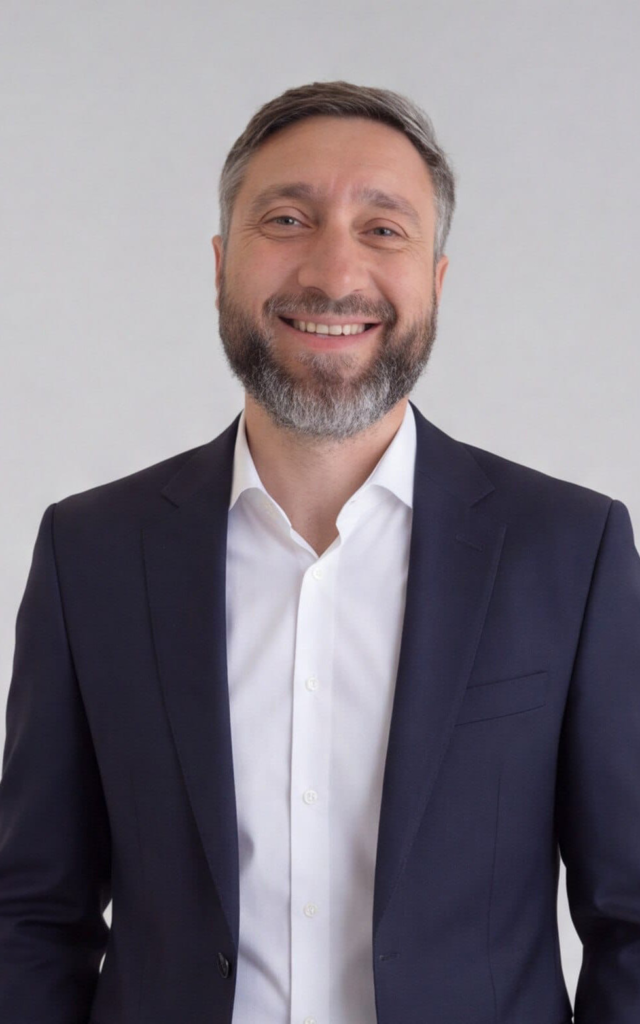
Ukrainian entrepreneur, inventor, engineering innovator, founder of ARTY / TM ARTI, and Associate Member of the Ukrainian Academy of Sciences, Vadym Ortynskyi represents a new generation of business leaders for whom science, innovation, and entrepreneurship are integral components of a unified development strategy.
His professional journey encompasses engineering, manufacturing management, research in textile technologies, the creation of proprietary intellectual property, and the development of opportunities for international expansion.
As the inventor of a patented method for applying logos to sportswear, Ortynskyi views his innovation not merely as a technological improvement in manufacturing, but as the foundation for a potential international business model capable of integrating advanced technologies, manufacturing partnerships, licensing, and franchising.
In this exclusive interview with the international publication Ukrainians and the World, Vadym Ortynskyi shares his vision for the future of modern industry, the prospects of entering the U.S. market, the economic significance of technological innovation for the United States, and the role of international intellectual networks in building globally competitive businesses.
 1. Mr. Ortynskyi, your professional journey reflects a remarkable transformation from a mechanical engineer into an entrepreneur, inventor, and founder of your own technologydriven business. How did your entrepreneurial experience develop, and which decisions proved decisive to your success?
Vadym Ortynskyi:
I have always believed that a true entrepreneur must understand not only how to sell a product, but also how that product is created, what problem it solves, and how to ensure its long-term competitiveness.
The foundation of my professional career is my engineering education at the Technological University of Podillia. It was there that I developed a systematic approach to manufacturing processes, quality management, resource efficiency, and the search for innovative technological solutions.
Over time, I realized that engineering knowledge alone was not sufficient to build a business capable of significant growth. An entrepreneur must learn to think in terms of markets, investment, partnerships, operational efficiency, and strategic development.
The establishment of ARTY / TM ARTI was the result of bringing these competencies together.
For me, ARTY / TM ARTI is much more than a sportswear manufacturing company. I view it as a technology platform where manufacturing, textile personalization, engineering research, and intellectual property management operate as an integrated system.
Throughout my entrepreneurial career, I have gradually developed three fundamental principles.
First, product quality should be the outcome of a properly designed technological process, not a matter of chance.
Second, a business must continuously evolve. If a company fails to invest in knowledge, equipment, research, and human capital, it will gradually lose its competitive advantages.
Third, the true value of an enterprise is determined not only by its current sales but also by its ability to scale its business model.
Today, I evaluate my professional experience through the broader perspective of international development.
My ambition is not simply to introduce a Ukrainian product into foreign markets. I want to establish a system in which Ukrainian technology can become the foundation for international manufacturing, an extensive partnership network, and sustainable long-term economic development.
My core entrepreneurial philosophy is that a business becomes genuinely strong when its competitive advantage is built on knowledge, technology, and intellectual property.
2. You have consistently invested in your professional development, pursuing additional education in strategic management, entrepreneurship, and business advocacy. How has this knowledge influenced your management approach?
Vadym Ortynskyi:
At a certain stage in an entrepreneur’s career, it becomes clear that personal professional experience, while extremely valuable, is not sufficient to sustain further growth.
Developing a company requires systematic knowledge of finance, management, organizational structures, international competition, and strategic planning.
That is why I have always attached considerable importance to continuing business education.
My studies at the Nova Poshta Business School, participation in the SURE — Strategic Ukrainian Regional Entrepreneurship — program, and training in business advocacy helped me develop a broader understanding of entrepreneurship.
I began to view a manufacturing company not merely as a combination of equipment, employees, and customer orders, but as an organizational system that must be manageable, predictable, and capable of operating under different economic conditions.
My involvement in Podillia Fashion Cluster also played an important role in my professional development.
The cluster model clearly demonstrates how productive collaboration can be among manufacturers, researchers, designers, educational institutions, and other industry participants.
I gained additional valuable experience as a jury member for City Accelerator 2025 and the Barvy Podillia competitions for emerging fashion designers.
When evaluating innovative projects, one begins to recognize more clearly the distinction between an interesting idea and a solution with genuine implementation potential.
For me, the originality of a product is only one consideration. Equally important are technological feasibility, practical value, economic viability, competitive advantages, and scalability.
Today, I am convinced that the leader of a modern technology-driven company must combine the competencies of an engineer, entrepreneur, strategist, and international communicator.
In the global economy, competitive advantage belongs not simply to companies that grow rapidly, but to those capable of managing that growth systematically and sustainably.
3. You are an Associate Member of the Ukrainian Academy of Sciences, a co-author of scientific publications, and a researcher specializing in textile manufacturing technologies. How did your practical experience lead you into scientific research, and what role does research play in your business?
Vadym Ortynskyi:
For me, science has never been an activity disconnected from real-world manufacturing.
On the contrary, the practical challenges encountered in production often become the source of the most compelling scientific questions.
The textile industry presents a wide range of technological challenges, from the properties of materials and their behavior during processing to ergonomics, wear resistance, functionality, and the interaction between a garment and the human body.
This is particularly important in sportswear manufacturing.
Sportswear is not simply a textile product. It is a functional system that must meet demanding requirements for mobility, comfort, durability, elasticity, and prolonged use.
My scientific work focuses on investigating precisely these relationships.
Together with my academic colleagues, I have contributed to research publications examining the psychophysiological aspects of garment design, including papers published in the peer-reviewed journal Herald of Khmelnytskyi National University: Technical Sciences.
This field has substantial practical significance because contemporary design must consider not only the visual appearance of a product, but also human physiological characteristics, material functionality, and the conditions under which garments are used.
In July 2026, I was elected an Associate Member of the Ukrainian Academy of Sciences.
For me, this recognition represents, above all, a professional responsibility and an additional motivation to continue my research activities.
I strongly believe that one of the most promising approaches is a model in which business serves both as a driving force behind scientific research and as a practical environment for its implementation.
Manufacturing identifies the problem. Science provides the methods to solve it. Engineering transforms those methods into technology. Business ensures implementation and commercialization.
In my view, this integrated approach should form the foundation of modern industrial development.
For international markets, it is particularly important that Ukrainian entrepreneurs move beyond the role of manufacturers of finished products and become developers of proprietary technological solutions.
A country becomes technologically competitive when it is capable not only of manufacturing products, but also of generating intellectual property that helps shape the manufacturing standards of the future.
 4. One of your most significant achievements is Ukrainian Utility Model Patent No. 162803, “Method for Applying Logos to Sportswear.” What makes this technology innovative, and which challenges in the modern textile industry is it designed to address?
Vadym Ortynskyi:
The development of this technology originated from a specific manufacturing need.
In the process of sportswear personalization, manufacturers face a complex technical challenge: ensuring the reliable adhesion of logos and other graphic elements to elastic materials that are continuously subjected to mechanical stress.
Sportswear stretches, deforms during movement, undergoes repeated washing, and is frequently used under conditions of increased humidity and temperature fluctuations.
These factors create additional requirements for the quality and durability of applied graphics.
Conventional methods do not always provide an optimal combination of material elasticity, image durability, and manufacturing efficiency.
My invention is designed to address precisely this combination of challenges.
The patented technological solution integrates several interconnected processes.
The first is cold-plasma treatment of the textile surface. This treatment can modify the surface properties of fibers, creating more favorable conditions for the adhesion of applied materials.
The second is two-stage thermal fixation, designed to facilitate the controlled formation and stabilization of the bond between the applied image and the textile substrate.
The third is the application of a protective polyurethane coating, intended to improve the resistance of the applied graphics to mechanical stress and operational wear.
I see the innovation not merely in the individual technological operations, but in their systematic integration and controlled execution.
We approach the entire application process as a unified technological sequence in which the outcome of each stage influences the quality of the finished product.
For industrial implementation, reproducibility is especially important.
In other words, the technology must perform reliably not only in an isolated experiment, but also throughout repeated manufacturing cycles.
That is why I place particular emphasis on the standardization of processing parameters, quality control, laboratory testing, and the continuous optimization of production processes.
The potential advantages of the technology include improved durability of personalized garments, a reduction in manufacturing defects, more efficient resource utilization, and the creation of conditions for more effective sportswear production.
The actual extent of these advantages must be established through comparative testing under relevant manufacturing conditions.
For me, obtaining a patent does not mark the completion of the development process. It marks the beginning of the next stage.
The objective of an inventor is not simply to secure legal protection for a technical solution. The objective is to transform that solution into a technology capable of generating measurable economic value for an entire industry.
5. Your invention has potential applications not only in sportswear but also across the broader personalized textile industry. How do you envision its economic and technological impact on the international market?
Vadym Ortynskyi:
The modern textile and apparel industry is undergoing a significant structural transformation.
Consumers increasingly expect more than standardized, mass-produced products. They seek products tailored to their individual needs and preferences.
This trend extends to sports teams, fitness clubs, corporate customers, educational institutions, professional organizations, and individual consumers.
For manufacturers, this shift presents both an opportunity and a challenge.
On the one hand, personalization enables companies to generate added value and serve specialized market segments.
On the other hand, smaller production batches, diverse design requirements, and higher quality expectations can complicate manufacturing processes and increase production costs.
This is precisely where technological innovation becomes particularly important.
I see the potential of my technology in establishing a more standardized and reproducible model for the personalization of elastic textile materials.
6. You view the United States as a promising market for developing and scaling your technologies. What is your strategy for entering the American market, and what challenges facing the U.S. economy can your business help address?
Vadym Ortynskyi:
I firmly believe that international competitiveness today is determined not so much by the size of a company as by its ability to deliver technologies that address specific economic challenges.
For me, entering the American market is about much more than geographical expansion. It represents an opportunity to integrate Ukrainian engineering expertise, intellectual property, and technological innovation into the manufacturing ecosystem of one of the world’s largest economies.
My professional background allows me to approach this challenge from three complementary perspectives: as an engineer, an inventor, and an entrepreneur. An engineer evaluates technological efficiency, an inventor seeks fundamentally new solutions, and an entrepreneur must ensure their economic viability.
The combination of these competencies forms the foundation of my business philosophy.
The technology I developed for applying logos to sportswear, protected by Ukrainian Utility Model Patent
No. 162803, is designed to improve the technological processes involved in personalizing elastic textile materials.
The central challenge I sought to address was how to achieve durable, high-quality image application on fabrics subjected to continuous stretching, friction, repeated washing, and intensive physical activity.
Conventional application methods can face limitations in image durability, elasticity, and the stability of their performance characteristics throughout a garment’s useful life.
My technological approach integrates cold-plasma surface preparation, two-stage thermal fixation, and a protective polyurethane coating.
The objective of combining these processes is to improve application reliability and establish a technological framework that can be standardized for commercial manufacturing.
I see the potential value of this innovation to the American economy in four strategic areas.
First, technological modernization of manufacturing.
American companies operating in sportswear, personalized textiles, and apparel branding increasingly require consistent product quality and efficient manufacturing processes. My technology has the potential to provide an additional tool for improving production performance.
Second, the development of small and medium-sized enterprises.
I envision a manufacturing model that could be adopted by regional businesses, local entrepreneurs, and specialized textile manufacturers.
Such an approach would allow the technology to serve not only major corporations but also create new opportunities for smaller American businesses.
Third, job creation and workforce development.
Localizing the technology in the United States could involve training specialists, developing engineering expertise, managing production facilities, implementing quality assurance systems, and building customer service operations.
Fourth, strengthening domestic manufacturing supply chains.
I see considerable potential in a model where sportswear personalization takes place closer to the American end customer.
This approach could help reduce order fulfillment times, increase manufacturing flexibility, and decrease dependence on certain external suppliers.
My strategy is based on phased development: adapting the technology to U.S. market requirements, validating the commercial model, establishing strategic partnerships, and subsequently scaling through regional operators.
Importantly, these outcomes must be demonstrated through measurable indicators rather than declarations.
Relevant metrics would include the number of jobs created, investment generated, manufacturing productivity, demand from American customers, and the economic efficiency of implementation.
I view the U.S. national interest through the lens of tangible economic impact. Innovation should contribute to American business development, strengthen domestic manufacturing capabilities, and generate added value within the country.
That is precisely my long-term objective: not merely to sell products in the United States, but to establish a technological system capable of becoming an integral part of the American manufacturing economy.
 7. International expansion in technology-driven industries is impossible without reliable American partners. What opportunities do you see for cooperation with Lotus Innovations and other members of the U.S. business community?
Vadym Ortynskyi:
My experience has taught me an essential principle: a technological innovation may be unique, but its international success depends largely on the strength and structure of the partnerships supporting it.
In my view, a strong international partnership is much more than cooperation between two companies. It is a combination of intellectual capital, technological expertise, managerial resources, and access to markets.
This is the perspective from which I assess potential cooperation with the American company Lotus Innovations and other businesses interested in advancing innovative manufacturing technologies.
I see several promising areas for collaboration.
The first is technological partnership, through which Ukrainian engineering innovations could be adapted to meet the operational needs of American manufacturers.
For me, it is essential that technology should not remain merely an intellectual property asset.
It must become a practical instrument that can be implemented, evaluated, refined, and successfully commercialized.
The second area is intellectual property commercialization.
Obtaining a patent is an important milestone, but the true economic potential of an invention is realized through licensing, manufacturing agreements, technological partnerships, and the development of new products.
The third area is the joint development of a scalable business model.
I see opportunities to establish standardized manufacturing processes that could be adapted to different companies, geographic regions, and customer segments.
The fourth area is access to new segments of the American market.
The sports industry encompasses professional clubs, university and school teams, sports academies, fitness networks, corporate customers, and manufacturers of branded apparel.
Each segment has its own requirements, but they all share a need for reliable product personalization.
For me, cooperation with American companies is not solely about commercial growth.
I am interested in building a sustainable, long-term ecosystem in which Ukrainian technological expertise is combined with American entrepreneurial culture, access to capital, and sophisticated business infrastructure.
At the same time, international cooperation requires a clearly defined legal and economic framework.
It is essential to establish intellectual property rights, partner responsibilities, investment commitments, quality standards, and effective risk-management mechanisms.
I believe that transparency in these relationships is fundamental to their long-term sustainability.
My strategic principle is straightforward: a partnership must generate new economic value rather than merely provide a formal exchange of opportunities.
My ambition is for future American partnerships to become a foundation for systematic technology transfer, manufacturing development, and the international expansion of an innovation-driven business.
8. Franchising remains one of the most effective instruments for international business expansion. Are you considering establishing a U.S. franchise network based on the ARTY / TM ARTI brand and your patented technology?
Vadym Ortynskyi:
Yes. I view franchising as one of the most promising instruments for expanding my business in the American market.
However, to me, franchising means much more than granting permission to use a trademark.
The true value of a technology-based franchise lies in the ability to transfer a comprehensive, standardized business system to a partner.
Such a system must include the technology itself, manufacturing processes, professional training, quality control, order management, and ongoing commercial support.
Many entrepreneurs mistakenly believe that scaling begins with opening new locations.
I believe that scaling begins with standardization.
If a technological process cannot be reliably reproduced under different manufacturing conditions while maintaining consistent quality, building a large network will only multiply operational risks.
That is why I place particular emphasis on developing technological protocols, production standards, and quality-control systems.
Within a potential American ARTY / TM ARTI franchise model, I envision several interconnected components.
First, the use of a unified technological methodology for applying graphics and branding to sportswear.
Second, the training of regional partners and the transfer of standardized manufacturing procedures.
Third, the establishment of a quality-control system capable of ensuring that products meet defined technical requirements regardless of their manufacturing location.
Fourth, centralized support for partners in branding, marketing, technological assistance, and sales development.
Fifth, a unified intellectual property management framework, including properly structured licensing rights and the protection of proprietary technological documentation.
Potential partners could include established American textile-personalization businesses as well as entrepreneurs interested in launching their own manufacturing operations.
I consider the integration of this technology into existing businesses particularly promising.
Such an approach could reduce initial capital requirements and accelerate entry into local markets.
Nevertheless, before launching a franchise program in the United States, it would be necessary to validate its financial performance, adapt contractual arrangements to U.S. law, prepare the required franchise disclosure documentation, and establish an appropriate intellectual property protection strategy.
My approach follows a clear sequence: first, a proven technology and commercially viable business model; second, pilot partners; and only then, systematic expansion.
In the long term, I envision the possibility of establishing a network of manufacturing partners across multiple U.S. states.
This model could contribute not only to the growth of my brand but also to new entrepreneurial opportunities, job creation, local manufacturing expertise, and demand for supporting services.
I want to build a business whose success does not depend on my personal presence at every manufacturing facility, but on the effectiveness of the technological and managerial system I have created.
That, in my opinion, is what distinguishes a local enterprise from a company capable of operating internationally.
9. You actively engage with the scientific and business communities and are interested in international cooperation through the International Association of Scientists “Intellectual Leadership.” What strategic significance does participation in such an international intellectual community hold for you?
Vadym Ortynskyi:
I am convinced that one of the most valuable assets a modern entrepreneur can possess is a strong intellectual and professional network.
Today, major innovations rarely emerge in isolation. They are developed at the intersection of different disciplines, scientific traditions, engineering competencies, entrepreneurial experience, and international collaboration.
For this reason, I consider integration into the international scientific community a strategically important aspect of my professional development.
My work already connects several fields: engineering, materials science, manufacturing, design, business management, and intellectual property.
My involvement in scientific research, academic publications, university collaborations, and membership in the Ukrainian Academy of Sciences has strengthened my understanding that the commercial success of a technology depends significantly on its scientific foundation.
I have also had the opportunity to evaluate innovative projects through City Accelerator and serve on the jury of the Barvy Podillia competitions for emerging fashion designers.
These experiences demonstrated how important it is to cultivate an environment in which scientific ideas can evolve into practical solutions.
This is precisely how I view potential cooperation with the International Association of Scientists “Intellectual Leadership.”
For me, the value of such an organization lies primarily in its ability to bring together individuals with diverse expertise who share a common mission: advancing science, innovation, and international entrepreneurship.
I see several strategic areas for collaboration.
First, the development of joint scientific and applied research projects involving Ukrainian and American specialists.
Second, the advancement of international technology transfer, enabling research outcomes to find practical applications in manufacturing.
Third, support for inventors and entrepreneurs in commercializing their intellectual property.
Fourth, the creation of professional connections among scientists, business leaders, investors, and international experts.
Fifth, the development of the next generation of engineers and entrepreneurs through mentorship, collaborative research, and participation in innovation programs.
Personally, I believe that scientific associations should not limit themselves to conferences or academic discussions.
I would like to see concrete outcomes: new inventions, collaborative research programs, technological partnerships, successful startups, and commercially viable projects.
Cooperation between Ukraine and the United States is particularly significant in this context.
Ukraine possesses substantial engineering and scientific talent.
The United States offers a sophisticated investment ecosystem, an extensive domestic market, and significant opportunities for technology commercialization.
Combining these strengths could facilitate the development of internationally competitive enterprises.
I believe that intellectual leadership is not defined solely by individual scientific achievements or professional recognition. It is the ability to unite knowledge, people, and resources around solutions that generate meaningful benefits for society and the economy.
This is the approach I strive to apply throughout my scientific and entrepreneurial activities.
10. Looking ahead five to ten years, how do you envision the future of ARTY / TM ARTI and your technology in the international market? What advice would you offer Ukrainian entrepreneurs seeking to enter the United States?
Vadym Ortynskyi:
I have always regarded entrepreneurship as a process of creating long-term value.
For me, the primary measure of success is not simply a company’s current revenue or the number of its customers.
What matters far more is whether a business can evolve, remain competitive, create new opportunities for people, and operate sustainably under changing market conditions.
Over the next five to ten years, I envision ARTY / TM ARTI becoming more than a sportswear manufacturer.
My ambition is to develop it into an international technology platform specializing in textile personalization.
My strategic objective is to move beyond an individual manufacturing operation toward a comprehensive model for the international commercialization of technology.
To achieve this vision, I have identified several priorities.
The first is the continued development of technology and research activities.
Every innovation requires ongoing improvement.
I intend to continue researching textile material properties, surface-treatment technologies, image-application methods, and ways to enhance the performance characteristics of sportswear.
The second priority is the international commercialization of intellectual property.
My goal is to ensure that the technology finds practical applications in international markets.
This requires appropriate legal protection, adaptation to the regulatory and technical requirements of different countries, the establishment of partnerships, and the development of effective commercial mechanisms.
The third priority is business development in the United States.
I consider the American market one of the key directions for strategic growth.
At the same time, I recognize that entering this market requires far more than a high-quality product.
It demands a thorough understanding of the competitive landscape, local standards, financial planning, legal safeguards, and the practical realities of doing business in the United States.
The fourth priority is the development of international partnerships and expansion through licensing and franchising.
I believe the future of technology companies depends substantially on their ability to create business models that can be replicated across multiple regions without compromising quality.
The fifth priority is human capital development.
In any technology-driven business, people remain the most important resource: engineers, researchers, designers, technologists, and entrepreneurs.
I would like the international development of my business to create opportunities not only for the company itself but also for talented professionals seeking to realize their potential.
As for my advice to Ukrainian entrepreneurs planning to enter international markets, I would emphasize several fundamental principles.
First and foremost, do not confuse entering an international market with simply registering a company abroad.
Establishing a legal entity is an administrative task.
Building an internationally competitive business requires an entirely different level of responsibility.
You must clearly understand the problem your product solves, why customers should choose your company, and what constitutes your sustainable competitive advantage.
My second recommendation is to invest in knowledge.
My own professional journey has demonstrated the importance of combining formal education, practical manufacturing experience, continued professional training, and the constant development of managerial competencies.
My third recommendation is to protect your intellectual property.
For a technology company, patents, trademarks, knowhow, and properly documented ownership rights can become fundamental drivers of long-term business value. However, it is essential to understand that obtaining a patent in one country does not automatically provide equivalent protection in other jurisdictions.
My fourth recommendation is to build a strong professional network.
No entrepreneur can be an expert in everything. True leadership lies in identifying competent partners, bringing people together, and creating a system in which every participant strengthens the overall result.
My fifth, and perhaps most important, recommendation is to think strategically.
An international business cannot be built overnight. It requires discipline, trust, consistency, adaptability, and the willingness to make difficult decisions.
Ukrainian entrepreneurs possess important competitive strengths: a strong engineering tradition, adaptability, practical experience, and the ability to operate under conditions of considerable uncertainty.
However, these qualities alone are not enough to succeed in the United States.
They must be supported by professional management, high-quality products, a transparent business model, and a genuine understanding of the needs of the American market.
I believe the future of Ukrainian international entrepreneurship lies not only in exporting goods, but above all in exporting intellectual capital, technology, managerial expertise, and innovative business models.
My personal ambition is to contribute to that transformation.
I want Ukrainian engineering innovations to be represented in international markets not merely as promising ideas, but as fully developed, competitive technologies capable of generating measurable economic value.
And if, ten years from now, my technology is being utilized by manufacturing companies across different markets, supporting entrepreneurial development, and contributing to the creation of new jobs, I will consider that a significant professional achievement.
Because, in my view, the true value of an invention is determined not only by its technical novelty, but also by the meaningful benefits it can deliver to individuals, businesses, and society as a whole.
About Vadym Ortynskyi
Vadym Ortynskyi is a Ukrainian entrepreneur, engineering innovator, founder of ARTY / TM ARTI, developer of a patented method for applying logos to sportswear, and Associate Member of the Ukrainian Academy of Sciences.
International Publication: Ukrainians and the World
Interview by Nadiia Stsetyshun